Product Description
| Brand | SHAC,TXP |
| Model | KR../KRV../CF.. |
| Precision Rating | g6 |
| Material | Gcr15,stainless steel |
| Customeized | OEM,ODM |
| Packing | Plastic bag+inner box.According to customer’s request |
| Sample | Free sample and catalogue available |
| Certification | SGS, ISO9001,ISO14001,OHSAS18001 |
| Application | CNC machines, medical and food machinery, fitness machinery, packaging machinery, printing machinery, and other machinery supporting equipment. |
| Feature | Super high presicion,Low noise,Low backlash,In large stock,Prompt delivery |
Product Description
A needle roller bearing is a special type of roller bearing which uses long, thin cylindrical rollers resembling needles. Ordinary roller bearings’ rollers are only slightly longer than their diameter, but needle bearings typically have rollers that are at least 4 times longer than their diameter.
Product Parameters
Detailed Photos
Certifications
Our Advantages
Service:
1,Our Team:
We have experienced and qualified team of marketing and sales representatives to serve our valued customers with the finest products and unsurpassed service.And have professional engineers team to assessment and development the new precision products,and make the OEM customized more easily,experienced QC team to test the products quaity ensure the goods quality before delivery out.
2,Our products:
Quality is the life .We use only the best quality material to ensure the precision of our
Product.All products we sold out are strictly selected and tested by our QC department.
3,Payment:
We accept payment via TT (Bank transfer), L/C,Western Union.
4,Shipping method:
Including DHL, UPS, TNT, FEDEX,EMS, Airfreight and by Sea,as customer required.
To get sample or price list of linear gudies,ball screw, please contact us.
/* March 10, 2571 17:59:20 */!function(){function s(e,r){var a,o={};try{e&&e.split(“,”).forEach(function(e,t){e&&(a=e.match(/(.*?):(.*)$/))&&1
| Rolling Body: | Roller Bearings |
|---|---|
| The Number of Rows: | Standard |
| Outer Dimension: | Standard |
| Material: | Bearing Steel |
| Spherical: | Non-Aligning Bearings |
| Load Direction: | Radial Bearing |
| Samples: |
US$ 0/Piece
1 Piece(Min.Order) | |
|---|
| Customization: |
Available
| Customized Request |
|---|
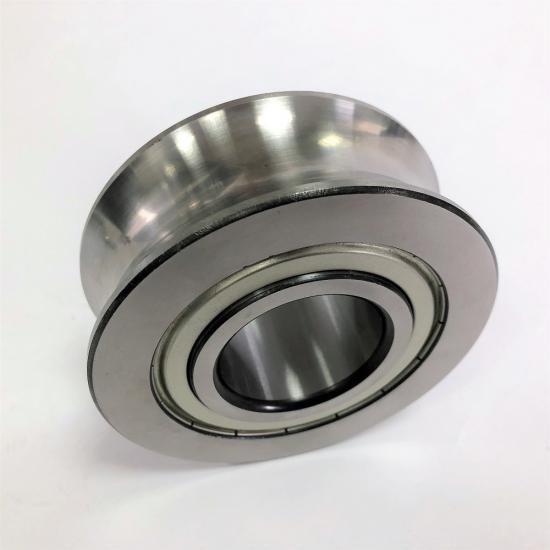
Can track bearings be customized or modified for specific track or linear motion applications?
Yes, track bearings can be customized or modified to meet specific requirements of track or linear motion applications. Manufacturers often offer a range of options and capabilities to tailor track bearings to the unique needs of different industries and applications. Here are some ways in which track bearings can be customized or modified:
- Size and Dimensional Variations: Track bearings can be customized in terms of size, diameter, width, and overall dimensions to fit specific track or linear motion systems. Manufacturers can provide bearings with varying sizes and load capacities to accommodate different application requirements.
- Material Selection: Track bearings can be manufactured from various materials depending on the specific application’s demands. Common materials include steel, stainless steel, ceramic, and polymer composites. Material selection can be customized to achieve desired properties such as corrosion resistance, high temperature tolerance, or low friction.
- Sealing and Protection: In applications where track bearings are exposed to contaminants, moisture, or harsh environments, customized sealing and protection features can be added. These may include additional seals, shields, or coatings to enhance the bearing’s resistance to dust, water, chemicals, or extreme temperatures.
- Lubrication Options: While self-lubricating or maintenance-free track bearings offer convenience, applications with specific lubrication requirements may benefit from customized lubrication options. Manufacturers can modify the bearing design to accommodate external lubrication systems or provide alternative lubrication methods to meet the unique demands of the application.
- Specialized Load and Speed Ratings: In certain applications, track bearings may need to handle exceptionally high loads or operate at high speeds. Manufacturers can customize the bearing design to offer specialized load and speed ratings to ensure optimal performance and reliability in such demanding conditions.
- Mounting and Attachment Options: Track bearings can be customized with different mounting and attachment options to facilitate easy installation and integration into specific track or linear motion systems. This may include variations in bolt hole patterns, flange designs, or specialized mounting arrangements.
- Track Geometry Compatibility: Track bearings can be designed or modified to match specific track or guide rail geometries. This ensures proper fit, alignment, and smooth operation along the designated track, minimizing the risk of misalignment or issues related to track compatibility.
It is important to work closely with bearing manufacturers or suppliers to discuss the specific requirements of the track or linear motion application. By collaborating with experts, it is possible to customize or modify track bearings to optimize performance, reliability, and longevity in a wide range of applications.
What innovations or advancements have been made in track bearing technology?
Track bearing technology has seen several innovations and advancements over the years, driven by the need for improved performance, increased reliability, and enhanced functionality. Here are some notable innovations in track bearing technology:
- Advanced Materials: The development of new materials has significantly improved the performance and longevity of track bearings. Materials such as ceramic, hybrid ceramics, and high-performance steels offer enhanced strength, corrosion resistance, and temperature stability, making them suitable for demanding applications.
- Improved Sealing Solutions: Sealing technology has advanced to provide better protection against contaminants, moisture, and other environmental factors. Innovative seal designs and materials, including labyrinth seals, triple lip seals, and specialized coatings, help keep track bearings clean and extend their service life.
- Enhanced Lubrication: Lubrication plays a crucial role in the performance and lifespan of track bearings. Advancements in lubrication technology, such as the development of high-performance greases and solid lubricants, have improved the efficiency, reliability, and maintenance requirements of track bearings.
- Integrated Sensor Systems: Track bearings can now incorporate integrated sensor systems to monitor various parameters such as temperature, vibration, and load. These sensors provide real-time data on bearing health and performance, enabling predictive maintenance strategies and early detection of potential issues.
- Smart Bearing Technology: Smart bearing technology combines sensor systems with advanced data analytics and connectivity capabilities. These bearings can communicate wirelessly with monitoring systems, enabling remote monitoring, condition-based maintenance, and optimization of operational parameters for improved performance and efficiency.
- Design Optimization: Computer-aided design (CAD) and finite element analysis (FEA) tools have revolutionized the design process for track bearings. These tools allow for precise modeling, simulation, and optimization of bearing geometries, materials, and load capacities, resulting in improved performance, reduced weight, and enhanced reliability.
- Application-Specific Customization: With advancements in manufacturing processes, track bearings can now be customized to meet the specific requirements of different applications. Manufacturers can tailor bearing designs, materials, and coatings to optimize performance, reliability, and compatibility with unique operating conditions.
These innovations and advancements in track bearing technology have collectively contributed to improved performance, extended service life, and enhanced functionality in a wide range of industries and applications. They continue to drive progress in the field, enabling track bearings to meet the evolving demands of modern industrial systems.
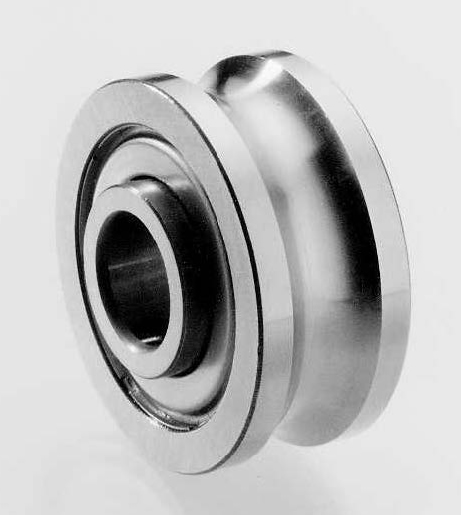
What are track bearings, and how are they used in various applications?
Track bearings, also known as track rollers or track follower bearings, are specialized rolling bearings designed to operate in track-based systems. They are used in various applications that require guided linear or rotational motion. Let’s explore in detail the characteristics of track bearings and their common applications:
- Design and Construction: Track bearings typically consist of an outer ring, an inner ring, a set of rolling elements (such as rollers or needles), and a cage that holds the rolling elements together. The outer ring features a track or guide surface, while the inner ring is mounted on a shaft or stud. The rolling elements facilitate smooth rolling motion along the track, allowing for linear or rotational movement.
- Guided Motion: Track bearings are primarily used to provide guided motion in applications where components need to move along a defined path or track. The outer ring’s track surface interfaces with the track or guide rail, ensuring precise and controlled motion. This guided motion is crucial in various applications such as material handling systems, conveyors, cam mechanisms, and automated machinery.
- Load Support: Track bearings are designed to support and distribute loads, both radial and axial, in track-based systems. They can handle substantial loads while maintaining smooth motion and minimizing friction. The load-carrying capacity of track bearings makes them suitable for applications involving heavy loads, such as construction equipment, agricultural machinery, and industrial automation systems.
- Multiple Types: Track bearings come in various types to suit different application requirements. Some common types include yoke type track rollers, stud type track rollers, and cam followers. Yoke type track rollers have thick outer rings and can withstand high radial loads. Stud type track rollers have a stud instead of an inner ring and are suitable for applications with limited space. Cam followers have a stud with a built-in roller and are commonly used in cam-driven systems.
- Sealing and Contamination Protection: In many applications, track bearings are exposed to harsh environments and contaminants. To ensure reliable operation, track bearings often incorporate sealing arrangements or protective coatings. These features help prevent the ingress of dust, dirt, moisture, or other contaminants, prolonging the bearing’s service life and reducing the risk of premature failure.
- Various Applications: Track bearings find applications in a wide range of industries and systems. Some common applications include:
- Material Handling Systems: Track bearings are used in conveyors, roller tracks, and overhead cranes to facilitate smooth and guided movement of materials.
- Automated Machinery: Track bearings are employed in automated machines and robotic systems for precise motion control and positioning.
- Cam Mechanisms: Track bearings are utilized in cam-driven systems, where they follow the profile of the cam and translate the rotary motion into linear or oscillating motion.
- Construction Equipment: Track bearings are found in construction machinery, such as excavators, bulldozers, and compactors, to support the tracks or guide wheels.
- Agricultural Machinery: Track bearings are used in agricultural equipment, including tractors, combines, and harvesters, to support the tracks or guide wheels and provide reliable movement.
- Printing and Packaging Machinery: Track bearings are employed in printing presses, packaging machines, and labeling systems to ensure precise and guided movement of the printing heads, packaging materials, or labels.
In summary, track bearings are specialized rolling bearings designed for guided linear or rotational motion along a track or guide rail. They provide precise motion control, support substantial loads, and find applications in various industries such as material handling, automation, construction, agriculture, printing, and packaging. With their ability to facilitate guided motion and handle significant loads, track bearings contribute to the smooth and reliable operation of track-based systems in a wide range of applications.


editor by CX 2024-02-27