Product Description
1
Product Parameters
Deep groove ball bearing 83A831GC5-KOYO – 36.2x67x23 mm
Overview
Quick Details
Category: Deep groove ball bearing Quality: Premium
Brand: KOYO Inner diam.: 36.2 mm
Outer diam.: 67 mm Width: 23mm
Weight: 0.316 kg N°EAN13: 3663952194837
Supply Ability
Supply Ability:100000 Piece/Pieces per Week
Deep groove ball bearing 83A831GC5-KOYO – 36.2x67x23 mm
1.Type:Auto Deep Groove Ball Bearing
2.Application:Automotive Bearing
3.Size:36.2x67x23 mm
4.Package:Single packing box Industry Carton Box
5.Bearing picture:
Our Advantages
Quality Control
KYJEN has developed a comprehensive quality assurance program and quality system. This program and system establishes controls throughout the entire manufacturing cycle — from raw material purchasing and product manufacturing to end-item delivery. It also assures meeting quality objectives and minimizes the possibility of compromises which could affect product quality and reliability. The quality assurance program is complete and responsive to all requirements of ISO9001:2000.
Our Mission
We are dedicated to providing our customers competitive price and excellent service.
Our Values
• Customers – Our first priority is to increase our customer ‘s competitiveness in their markets by offering outstanding service,best price and products. We maintain strong and long-term relationships with our customers and focus our work on their total satisfaction.
• Integrity – We set high personal standards for ourselves and expect the people with whom we conduct business to do the same. In our company,we keep our promises.
• Speed – We know customers have urgent needs. We are skilled at effective communication to interact with customers. In order to provide prompt service,emails and instant message are widely used.
• People – We believe that our people are our greatest resource; therefore, we empower them, give them the opportunity to develop and grow.
Chik has been successful cooperation with many overseas customers, leaving good reputation of credibility with a high-quality product quality. With adequate resource, strict quality control, high-quality service, and competitive price, Chik has been the first choice of many customers as bearing supplier. OEM is also welcomed as an optional cooperation method.
Applications
Packaging & Shipping
FAQ
Q: Why did you choose us?
A. We provide the best quality bearings with reasonable price, low friction, low noise and long service life.
B. With sufficient stock and fast delivery, you can choose our freight forwarder or your freight forwarder.
C. The best service provided by a well-trained international sales team.
Q: Do you accept small orders?
Surely, once your bearings are standard size bearings, even one, we will also accept.
Q: How long is your delivery time?
Generally speaking, if the goods are in stock, it is 1-3 days. If the goods are out of stock, it will take 6-10 days, depending on the quantity of the order.
Q: Do you provide samples? Is it free or extra?
Yes, we can provide a small amount of free samples. Do you mind paying the freight?
Q: What should I do if I don’t see the type of bearings I need?
We have too many bearing series numbers. Sometimes we can’t put them all on web. Just send us the inquiry and we will be very happy to send you the bearing details.
Welcome to contact me anytime!
/* January 22, 2571 19:08:37 */!function(){function s(e,r){var a,o={};try{e&&e.split(“,”).forEach(function(e,t){e&&(a=e.match(/(.*?):(.*)$/))&&1
| Seal Type: | Zz, 2RS |
|---|---|
| HRC: | 58-62 |
| Ball Class: | G16;G10 |
| Clearance: | C0;C2;C3;C4 |
| Tolearance: | P0;P6;P5 |
| Structure: | Inch Roller Bearing |
| Samples: |
US$ 0.5/Piece
1 Piece(Min.Order) | |
|---|
| Customization: |
Available
| Customized Request |
|---|
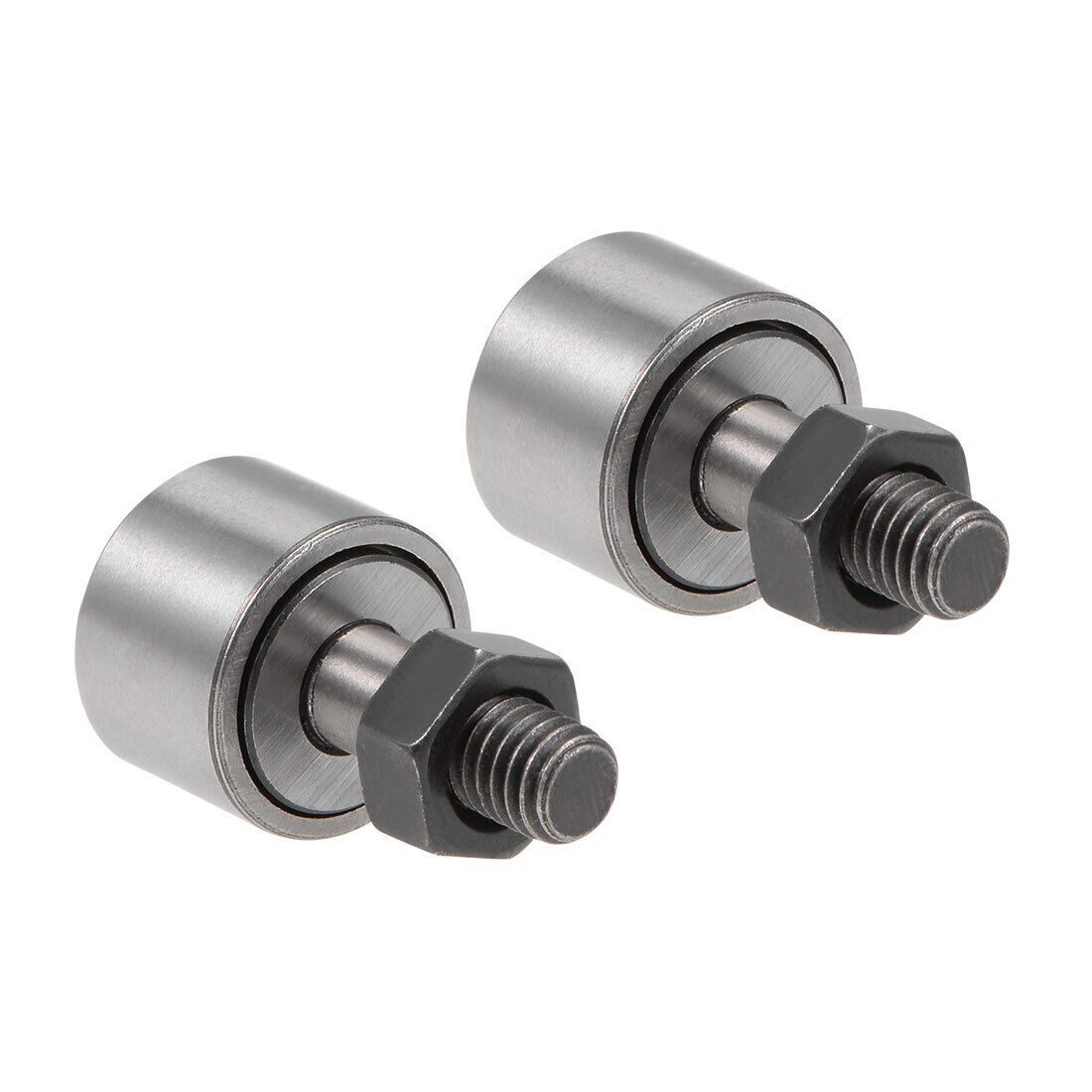
What are the considerations for selecting the right track bearings for a particular application?
Selecting the right track bearings for a particular application requires careful consideration of various factors to ensure optimal performance, reliability, and longevity. Here are the key considerations to keep in mind:
- Load Requirements: Assess the expected load conditions in the application. Consider both the static and dynamic loads that the track bearings will need to support. Determine the maximum load capacity required to ensure that the selected bearings can handle the anticipated loads without premature failure or excessive wear.
- Speed and Acceleration: Evaluate the speed and acceleration requirements of the application. Higher speeds and rapid accelerations can impose additional stresses on the track bearings. Choose bearings with suitable speed and acceleration ratings to ensure they can operate effectively within the desired range without compromising performance or causing premature wear.
- Environmental Factors: Consider the operating environment of the application. Evaluate factors such as temperature extremes, moisture, dust, chemicals, and potential exposure to corrosive substances. Select track bearings that are designed to withstand the specific environmental conditions to ensure optimal performance and longevity.
- Track and Rail Compatibility: Assess the compatibility of the track bearings with the existing track or rail system. Consider factors such as track geometry, dimensional requirements, and mounting options. Ensure that the selected bearings are suitable for the specific track or rail design to facilitate proper installation, alignment, and smooth operation.
- Maintenance and Lubrication: Evaluate the maintenance and lubrication requirements of the track bearings. Consider factors such as the need for regular maintenance, lubrication intervals, and the availability of suitable lubricants. Choose bearings that align with the desired maintenance practices and provide appropriate lubrication options based on the application’s operational demands.
- Expected Lifespan and Reliability: Determine the desired lifespan and reliability expectations for the track bearings. Consider factors such as the projected operating hours, duty cycles, and the criticality of the application. Select bearings from reputable manufacturers known for producing high-quality, reliable products that align with the expected lifespan and reliability requirements.
- Cost Considerations: Evaluate the cost-effectiveness of the track bearings. Consider the initial purchase cost as well as the long-term costs associated with maintenance, replacement, and potential downtime. Strive for a balance between the upfront investment and the overall value provided by the bearings in terms of performance, reliability, and longevity.
It is essential to consult with bearing manufacturers or industry experts who can provide guidance and recommendations based on the specific application requirements. By considering these factors and seeking expert advice, you can select the right track bearings that best meet the needs of your particular application.
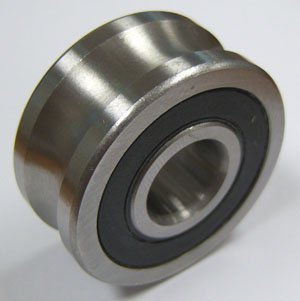
How do track bearings contribute to the precision, accuracy, and reliability of motion control systems?
Track bearings play a crucial role in enhancing the precision, accuracy, and reliability of motion control systems. They provide several key contributions that ensure smooth and consistent linear motion. Here’s a detailed explanation:
- Precision Guidance: Track bearings offer precise guidance for linear motion systems. They are designed with close tolerances and accurate geometries, allowing for accurate positioning and control of the moving components. This precision guidance ensures that the desired motion is achieved with minimal deviation or error.
- Smooth and Consistent Motion: By minimizing friction and providing smooth rolling or sliding surfaces, track bearings enable smooth and consistent motion in motion control systems. They reduce the effects of irregularities, misalignments, or vibrations, resulting in smoother operation and improved accuracy.
- Repeatable Performance: Track bearings provide repeatable performance in motion control systems. They offer consistent and predictable motion characteristics, allowing for precise and repeatable positioning of the moving components. This repeatability is essential in applications that require high accuracy and consistency, such as CNC machining, semiconductor manufacturing, and precision measurement systems.
- Load Distribution: Track bearings distribute the load evenly along their length, helping to minimize stress concentrations on specific components. This even load distribution improves the overall stability and reliability of the motion control system. It reduces the risk of component failure, deformation, or excessive wear, contributing to enhanced system reliability.
- Minimized Play and Backlash: Track bearings are designed to minimize play and backlash, which are undesirable movements or clearances between components. Play and backlash can introduce inaccuracies and reduce the precision of motion control systems. Track bearings with tight tolerances and optimized designs help minimize these undesirable effects, ensuring precise and accurate motion.
- Stiffness and Rigidity: Track bearings provide stiffness and rigidity to the motion control system. They resist deflection and maintain their shape under load, minimizing any unwanted flexing or bending. This stiffness enhances the overall stability and precision of the system, allowing for precise control and accurate motion even under varying loads or external forces.
- Resistance to Contamination: Track bearings are often equipped with seals or shields to protect against contaminants such as dirt, dust, or liquids. This protection helps maintain the precision and reliability of the motion control system by preventing the ingress of particles that could interfere with the smooth operation of the bearings or cause premature wear and failure.
By incorporating track bearings into motion control systems, industries can benefit from improved precision, accuracy, and reliability. Whether it’s achieving precise positioning, ensuring consistent and repeatable motion, minimizing play and backlash, or providing reliable load distribution, track bearings contribute to the overall performance and integrity of motion control systems.
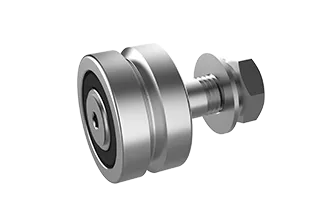
How do track bearings compare to other types of bearings like ball bearings or roller bearings?
Track bearings, ball bearings, and roller bearings are all types of rolling bearings used in various applications. Let’s compare track bearings to ball bearings and roller bearings to understand their similarities and differences:
- Design and Construction: Track bearings, ball bearings, and roller bearings have different designs and constructions. Track bearings, also known as track rollers or track follower bearings, are designed specifically for guided linear or rotational motion along a track or guide rail. They feature an outer ring with a track surface, an inner ring, rolling elements (such as rollers or needles), and a cage. Ball bearings, on the other hand, have spherical rolling elements (balls) sandwiched between inner and outer rings. Roller bearings, as the name suggests, have cylindrical or tapered rolling elements (rollers) between inner and outer rings.
- Motion and Load Handling: Track bearings are primarily used for guided motion in track-based systems, while ball bearings and roller bearings are used for general rotational or linear motion. Track bearings are designed to support both radial and axial loads and provide smooth and controlled motion along the track. Ball bearings and roller bearings are also capable of supporting radial and axial loads but are typically used in applications where the motion is not constrained to a specific track or guide rail. Roller bearings, with their larger contact area and higher load-carrying capacity, are often preferred for applications with higher loads.
- Applications: Track bearings are commonly used in applications such as material handling systems, conveyors, cam mechanisms, automated machinery, construction equipment, and agricultural machinery, where guided motion along a track or rail is required. Ball bearings and roller bearings find applications in a wide range of industries and systems, including electric motors, pumps, automotive applications, industrial machinery, and appliances.
- Friction and Efficiency: Track bearings, ball bearings, and roller bearings all aim to minimize friction and ensure efficient operation. However, due to their different designs and contact surfaces, they exhibit varying levels of friction. Ball bearings typically have lower friction due to point contact between the balls and the raceways. Roller bearings, especially tapered roller bearings, distribute the load over a larger contact area, resulting in slightly higher friction compared to ball bearings. Track bearings, with their track interface, may have slightly higher friction compared to ball bearings or roller bearings due to the rolling elements’ contact with the track surface.
- Installation and Maintenance: Track bearings, ball bearings, and roller bearings require proper installation and maintenance for optimal performance and longevity. However, track bearings may require additional attention during installation as they need to be properly aligned with the track or guide rail. Regular lubrication and periodic inspection are essential for all types of bearings to ensure smooth operation and prevent premature failure.
In summary, track bearings, ball bearings, and roller bearings have distinct designs and applications. Track bearings are specialized for guided motion along a track or rail, while ball bearings and roller bearings are more versatile and used in a wide range of rotational or linear motion applications. Each type of bearing has its advantages and considerations in terms of load handling, friction, efficiency, and installation requirements. Selecting the appropriate bearing type depends on the specific application requirements, load conditions, motion characteristics, and environmental factors.


editor by CX 2024-03-23