Product Description
Machine Milling Grinding Lathe Turning Parts Aluminum Brass Copper Magnesium Stainless Steel Titanium Metal Part Custom CNC Machining Die Casting for Auto Car
Product Description
1. Precision CNC machining parts strictly follow customers’ drawing, packing, and quality requirements.
2. Tolerance: between+/-0.01mm;
3. The high-tech CMM inspector to ensure the quality;
4. Full-Experienced engineers and well professional trained workers;
5. Fast delivery time;
6. Professional advice for our customers;
Detailed Photos
Product Parameters
Our advantage of cnc machining:
| Business Type | Beyond the Manufacturer and strong organized ability in the industrial |
| Benefits | 1. Deeper industrial experience at CNC machining parts service for more than 10-years,our customer’s requirement is our 1st priority. 2. 2D or 3D files is available; 3. We trust the quality priority and we insist the good quality should be based on the customers’ satisfied; 4. Without any MOQ requirement; 5.Faster delivery time; 6. Customized size and specification /OEM available 7. Near ZheJiang Port |
The material
| Materials Accept |
Stainless Steel | SS201, SS303, SS304, SS316 etc. |
| Steel | Q235, 20#, 45#, | |
| Brass | C36000 ( C26800), C37700 ( HPb59), C38500( HPb58), C27200(CuZn37) , C28000(CuZn40) | |
| Iron | 1213, 12L14,1215 etc. | |
| Bronze | C51000, C52100, C54400, etc. | |
| Aluminum | Al6061, Al6063,AL7075,AL5052 etc | |
| Plastic | ABS,POM,PC(Poly-Carbonate),PC+GF,PA(nylon),PA+GF, PMMA(acrylic)PEEK,PEI etc) |
Packaging & Shipping
- We prefer DHL or TNT express or other air freight between 1kg-100kg.
- we prefer sea freight more than 100kg or more than 1CBM
- As per customized specifications.
Company Profile
About us
HangZhou Emitech Technology Co.,Ltd is located in HangZhou City, ZheJiang Province, Which closed the ZheJiang .The Emitech Technology is mainly engaged in the CNC Machinery Industrial Service for 15 years. Our Parts are sold to Europe, America, Japan, South Korea and China in various kinds of industrial.At present, Our company has CNC Turning machines and CNC centers and equip with professional quality and testing instruments.We have full OEM Experience from worldwide, providing them with One-stop solutions for a broad range of applications.We look forward to cooperating with you!
Our Advantages
1. Precision CNC machining parts strictly follow customer’s drawing,packing and quality requirement.
2. Tolerance: between+/-0.01mm;
3. The high-tech CMM inspector to ensure the quality;
4. Full-Experienced engineers and well professional trained workers;
5. Fast delivery time;
6. Professional advice for our customers;
After Sales Service
OEM High Precision custom metal casting molds
We usually provide 12 Months repair service. If our duty, we will respond to send the new parts.
Our Service
| Our Processing | CNC center, CNC milling, CNC turning, drilling, grinding, bending, stamping, tapping, |
| Surface finish | Polishing, sandblasting, Zinc-plated, nickel-plated, chrome-plated, silver-plated, gold-plated, imitation gold-plated, |
| Tolerance | 0.05mm~0.1mm |
| QC System | 100% inspection before shipment |
| Drawing format | CAD / PDF/ DWG/ IGS/ STEP |
| Packaging | Plastic bag/Standard package / Carton or Pallet / As per customized specifications |
| Payment Terms | 30 -50%T/T in advance, 70-50% balance before delivery; Pay Pal or Western Union is acceptable. |
| Trade terms | EXW, FOB, CIF, As per the customer’s request |
| Shipment Terms |
1)We prefer DHL or TNT express or other air freight between 1kg-100kg. 2) we prefer sea freight more than 100kg or more than 1CBM |
| Note | The CNC machining parts are usually custom-made based on the customer’s drawings and samples. So we need the Down Payment |
/* January 22, 2571 19:08:37 */!function(){function s(e,r){var a,o={};try{e&&e.split(“,”).forEach(function(e,t){e&&(a=e.match(/(.*?):(.*)$/))&&1
| After-sales Service: | Repaire |
|---|---|
| Warranty: | Half a Year |
| Condition: | New |
| Certification: | CE, RoHS, GS, ISO9001 |
| Standard: | DIN, ASTM, GOST, GB, JIS, ANSI |
| Customized: | Customized |
| Samples: |
US$ 10/Piece
1 Piece(Min.Order) | |
|---|
| Customization: |
Available
| Customized Request |
|---|
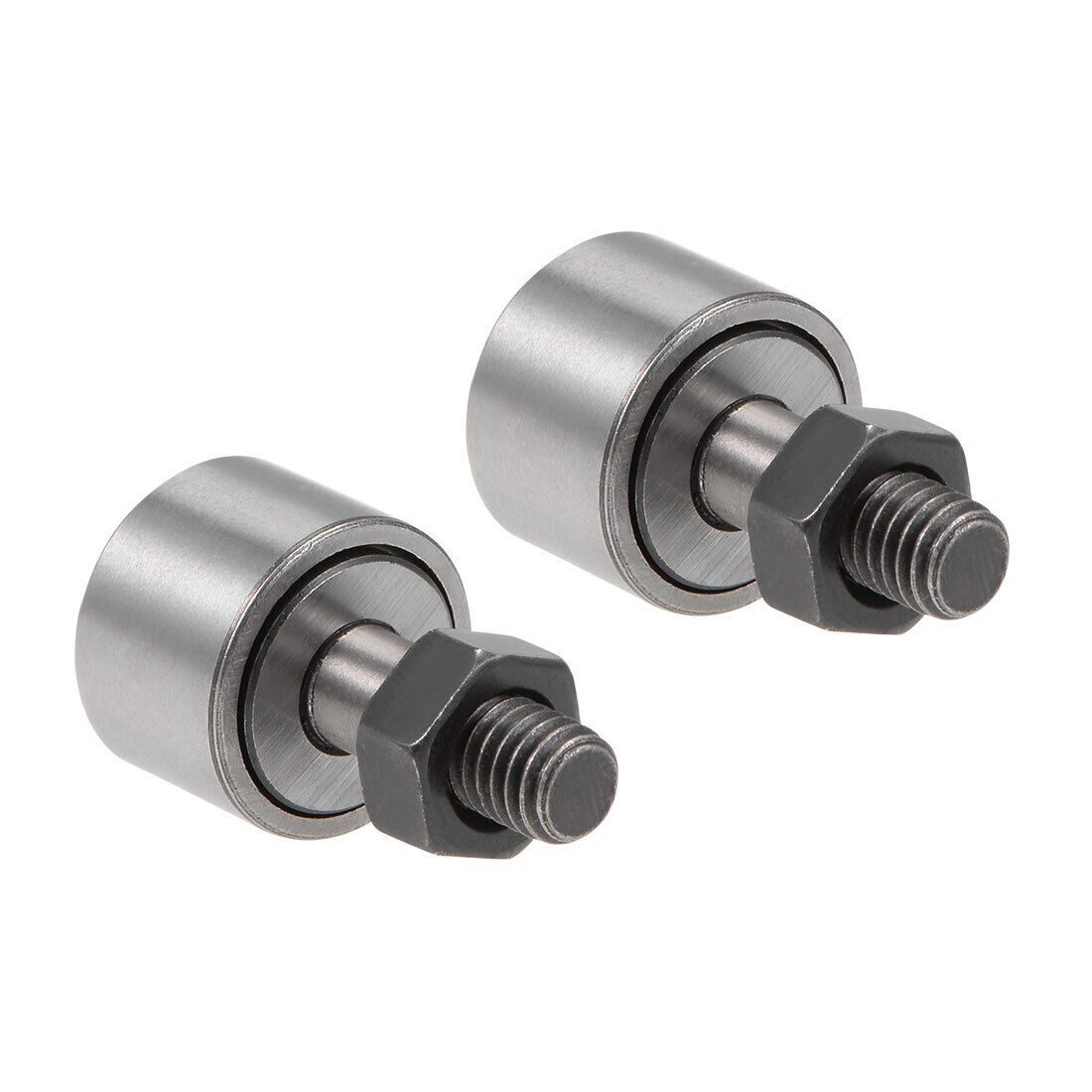
What are the considerations for selecting the right track bearings for a particular application?
Selecting the right track bearings for a particular application requires careful consideration of various factors to ensure optimal performance, reliability, and longevity. Here are the key considerations to keep in mind:
- Load Requirements: Assess the expected load conditions in the application. Consider both the static and dynamic loads that the track bearings will need to support. Determine the maximum load capacity required to ensure that the selected bearings can handle the anticipated loads without premature failure or excessive wear.
- Speed and Acceleration: Evaluate the speed and acceleration requirements of the application. Higher speeds and rapid accelerations can impose additional stresses on the track bearings. Choose bearings with suitable speed and acceleration ratings to ensure they can operate effectively within the desired range without compromising performance or causing premature wear.
- Environmental Factors: Consider the operating environment of the application. Evaluate factors such as temperature extremes, moisture, dust, chemicals, and potential exposure to corrosive substances. Select track bearings that are designed to withstand the specific environmental conditions to ensure optimal performance and longevity.
- Track and Rail Compatibility: Assess the compatibility of the track bearings with the existing track or rail system. Consider factors such as track geometry, dimensional requirements, and mounting options. Ensure that the selected bearings are suitable for the specific track or rail design to facilitate proper installation, alignment, and smooth operation.
- Maintenance and Lubrication: Evaluate the maintenance and lubrication requirements of the track bearings. Consider factors such as the need for regular maintenance, lubrication intervals, and the availability of suitable lubricants. Choose bearings that align with the desired maintenance practices and provide appropriate lubrication options based on the application’s operational demands.
- Expected Lifespan and Reliability: Determine the desired lifespan and reliability expectations for the track bearings. Consider factors such as the projected operating hours, duty cycles, and the criticality of the application. Select bearings from reputable manufacturers known for producing high-quality, reliable products that align with the expected lifespan and reliability requirements.
- Cost Considerations: Evaluate the cost-effectiveness of the track bearings. Consider the initial purchase cost as well as the long-term costs associated with maintenance, replacement, and potential downtime. Strive for a balance between the upfront investment and the overall value provided by the bearings in terms of performance, reliability, and longevity.
It is essential to consult with bearing manufacturers or industry experts who can provide guidance and recommendations based on the specific application requirements. By considering these factors and seeking expert advice, you can select the right track bearings that best meet the needs of your particular application.
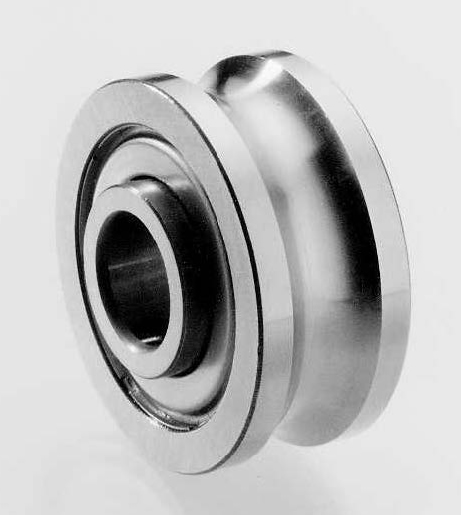
Are there potential challenges or limitations in using track bearings in specific industries?
While track bearings are widely used in various industries for their ability to support linear motion and handle heavy loads, there can be potential challenges and limitations associated with their use in specific industries. Here’s a detailed explanation:
1. Contamination and Harsh Environments:
Industries such as mining, construction, and agriculture often operate in harsh environments with high levels of contamination, including dust, dirt, and moisture. These contaminants can enter the track bearings and cause accelerated wear, reduced performance, and potential failure. Regular maintenance and appropriate sealing measures are required to mitigate these challenges.
2. High-Temperature Environments:
In industries like metal processing, glass manufacturing, and foundries, track bearings may be exposed to high temperatures. Excessive heat can affect the lubrication properties and structural integrity of bearings, leading to premature failure. Selecting track bearings specifically designed for high-temperature applications and using suitable lubricants are necessary to overcome this limitation.
3. Corrosive Chemicals:
Industries such as chemical processing, food and beverage, and wastewater treatment involve exposure to corrosive chemicals. Corrosion can significantly affect the performance and lifespan of track bearings. Choosing bearings made from corrosion-resistant materials or applying protective coatings can help address this challenge.
4. Heavy Load and Impact:
Industries like material handling, mining, and construction often require track bearings to withstand heavy loads and frequent impacts. Excessive load or impact can lead to premature wear, deformation, or even catastrophic failure of the bearings. Selecting track bearings with appropriate load capacities and impact resistance is crucial in these industries.
5. Precision and Accuracy:
In industries such as robotics, semiconductor manufacturing, and precision machining, track bearings may need to meet stringent requirements for precision and accuracy. Any deviation or play in the bearings can impact the overall performance and quality of the process. Using high-precision track bearings and ensuring proper alignment and installation are essential in these cases.
6. Speed and Acceleration:
Applications involving high-speed or rapid acceleration, such as automated assembly lines or conveyor systems, can impose additional challenges on track bearings. Excessive speed or acceleration can generate heat and vibration, leading to increased wear and reduced bearing life. Choosing track bearings with suitable speed and acceleration ratings is vital in these industries.
It is important to consult with bearing manufacturers or industry experts to identify and address any potential challenges or limitations specific to the industry and application at hand. By understanding these challenges and selecting track bearings designed to overcome them, industries can optimize performance, reliability, and longevity while mitigating risks and ensuring smooth operation.
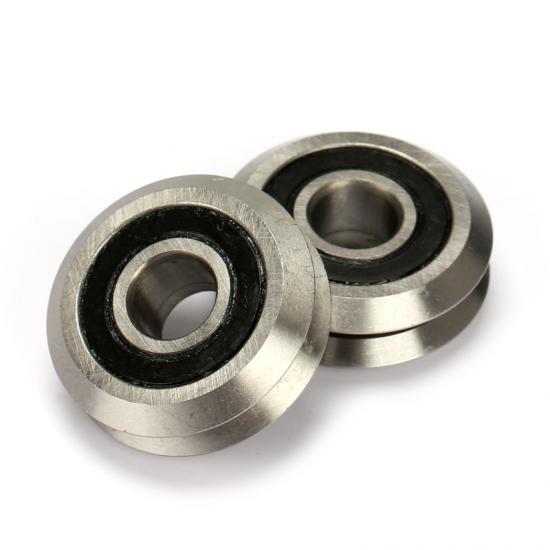
Can you describe the load-carrying capacity and load ratings of track bearings?
Track bearings are designed to withstand and carry various types of loads while maintaining smooth and controlled motion along a track or guide rail. The load-carrying capacity and load ratings of track bearings are crucial factors to consider when selecting the appropriate bearing for a specific application. Let’s delve into these concepts:
Load-Carrying Capacity:
The load-carrying capacity of a track bearing refers to its ability to support and distribute the applied loads without excessive deformation or failure. It is influenced by several factors, including the bearing’s design, materials, and operating conditions. The load-carrying capacity is typically specified in terms of static load capacity and dynamic load capacity.
The static load capacity indicates the maximum load that a track bearing can support without permanent deformation. It is determined by the bearing’s internal geometry, material strength, and the contact area between the rolling elements and raceways. Static loads are those that do not cause relative motion between the bearing and the track, such as when the bearing is stationary or subjected to a constant load.
The dynamic load capacity represents the maximum load that a track bearing can handle while still allowing smooth rolling motion. It takes into account the bearing’s ability to handle both radial and axial loads and considers factors such as the bearing’s internal clearance, lubrication, and operating speed. Dynamic loads are those that cause relative motion between the bearing and the track, such as when the bearing is subjected to varying loads or subjected to motion along the track.
Load Ratings:
Load ratings provide standardized values that indicate the maximum allowable loads for track bearings based on industry standards. These load ratings are commonly provided by bearing manufacturers and help users select the appropriate bearing for their specific application requirements. The two primary load ratings used for track bearings are the radial load rating and the axial load rating.
The radial load rating specifies the maximum radial load that a track bearing can withstand while maintaining proper performance and service life. It is expressed as a static load rating and a dynamic load rating. The static radial load rating indicates the maximum radial load that the bearing can support without permanent deformation, while the dynamic radial load rating represents the maximum radial load that the bearing can handle under typical operating conditions.
The axial load rating indicates the maximum axial load that a track bearing can withstand without excessive deformation or failure. It considers the applied axial force in the direction perpendicular to the track or guide rail. The axial load rating is typically provided as a static load rating and a dynamic load rating.
It’s important to note that load ratings are based on specific operating conditions, such as a certain speed, lubrication, and temperature. It is necessary to consider the actual operating conditions and factors such as shock loads, vibrations, and misalignments when applying load ratings to real-world applications.
By understanding the load-carrying capacity and load ratings of track bearings, engineers and designers can make informed decisions to ensure reliable and safe performance of the bearings in their applications.


editor by CX 2024-03-28