Product Description
Product Description
Needle Roller Bearing
Needle roller bearings are roller bearings with cylindrical rollers that are thin and long relative to their diameter. Such rollers are called needle rollers. Despite the smaller cross-section, the bearing still has a high load-carrying capacity. Needle roller bearings are equipped with slender rollers (roller diameter D≤5mm, L/D≥2.5, L is the length of the roller), so the radial structure is compact, and the inner diameter and bearing capacity are the same as other types of bearings. The smallest, especially suitable for support structures with limited radial installation dimensions.
Size: 5mm-500mm
Optional material: Bearing steel/stainless steel/carbon steel
Product accuracy class: P0 P6 P5
Cage Type: Material Stamping steel plate
Feature
Depending on the application, bearings without inner rings or needle roller cage assemblies can be selected. In order to ensure the same load capacity and running performance as the ring bearing, the hardness, machining accuracy and surface quality of the raceway surface of the shaft or housing hole should be similar to the raceway of the bearing ring.
1. High transmission efficiency
The friction coefficient of rolling bearings is smaller than that of sliding bearings, and the transmission efficiency is high.
2. Easy to maintain
Rolling bearings have been standardized, serialized and generalized, suitable for mass production and supply, and are very convenient to use and maintain;
3. High mechanical properties and long service life
Rolling bearings are made of bearing steel and heat treated. Therefore, rolling bearings not only have higher mechanical properties and longer service life, but also save more expensive non-ferrous metals used in the manufacture of sliding bearings;
4. Small clearance and high precision
The internal clearance of the rolling bearing is small, and the machining accuracy of each part is high, so the running accuracy is high. At the same time, the stiffness of the bearing can be increased by preloading.
5. Low calorific value
Due to the high transmission efficiency and low calorific value of rolling bearings, the consumption of lubricating oil can be reduced, and the lubrication and maintenance are more convenient;
6. Wide application space
Rolling bearings can be easily applied to any axis in space;
7. Large carrying capacity
Needle roller bearings have high load-carrying capacity and are suitable for support structures with limited mounting dimensions.
| Bearing type | Internal Diameter | Outer Diameter | Width | Bearing type | Internal Diameter | Outer Diameter | Width |
| d | D | B | d | D | B | ||
| (mm) | (mm) | (mm) | (mm) | (mm) | (mm) | ||
| BK0408 | 4 | 8 | 8 | K10X14X13 | 10 | 14 | 13 |
| BK0509 | 5 | 9 | 9 | K10X15X15 | 10 | 15 | 15 |
| BK0609 | 6 | 10 | 9 | K10X16X12 | 10 | 16 | 12 |
| BK0709 | 7 | 11 | 9 | K12X15X10 | 12 | 15 | 10 |
| BK0808 | 8 | 12 | 8 | K12X15X13 | 12 | 15 | 13 |
| BK571 | 8 | 12 | 10 | K12X16X10 | 12 | 16 | 10 |
| BK571 | 9 | 13 | 10 | K12X16X13 | 12 | 16 | 13 |
| BK571 | 9 | 13 | 12 | K12X18X12 | 12 | 18 | 12 |
| BK1571 | 10 | 14 | 10 | K14X18X10 | 14 | 18 | 10 |
| BK1012 | 10 | 14 | 12 | K14X18X13 | 14 | 18 | 13 |
| BK1210 | 12 | 16 | 10 | K14X18X15 | 14 | 18 | 15 |
| BK1412 | 14 | 20 | 12 | K14X18X17 | 14 | 18 | 17 |
| BK1416 | 14 | 20 | 16 | K14X20X12 | 14 | 20 | 12 |
| BK1512 | 15 | 21 | 12 | K15X19X10 | 15 | 19 | 10 |
| BK1516 | 15 | 21 | 16 | K15X19X13 | 15 | 19 | 13 |
| BK1612 | 16 | 22 | 12 | K15X20X13 | 15 | 20 | 13 |
| BK1616 | 16 | 22 | 16 | K16X20X10 | 16 | 20 | 10 |
| BK1712 | 17 | 23 | 12 | K16X20X13 | 16 | 20 | 13 |
| BK1812 | 18 | 24 | 12 | K16X20X17 | 16 | 20 | 17 |
| BK1816 | 18 | 24 | 16 | K16X22X12 | 16 | 22 | 12 |
| BK2012 | 20 | 26 | 12 | K16X22X17 | 16 | 22 | 17 |
| BK2016 | 20 | 26 | 16 | K17X21X10 | 17 | 21 | 10 |
| BK2212 | 22 | 28 | 12 | K17X21X13 | 17 | 21 | 13 |
| BK2216 | 22 | 28 | 16 | K17X21X15 | 17 | 21 | 15 |
| BK2512 | 25 | 32 | 12 | K17X21X17 | 17 | 21 | 17 |
| BK2516 | 25 | 32 | 16 | K17X23X15 | 17 | 23 | 15 |
| BK2520 | 25 | 32 | 20 | K18X22X10 | 18 | 22 | 10 |
| BK2816 | 28 | 35 | 16 | K18X22X13 | 18 | 22 | 13 |
| BK2820 | 28 | 35 | 20 | K18X22X17 | 18 | 22 | 17 |
| BK3012 | 30 | 37 | 12 | K18X23X20 | 18 | 23 | 20 |
| BK3016 | 30 | 37 | 16 | K18X24X12 | 18 | 24 | 12 |
| BK3571 | 30 | 37 | 20 | K18X24X17 | 18 | 24 | 17 |
| BK3512 | 35 | 42 | 12 | K18X24X20 | 18 | 24 | 20 |
| BK3520 | 35 | 42 | 20 | K20X24X10 | 20 | 24 | 10 |
| BK4012 | 40 | 47 | 12 | K20X24X13 | 20 | 24 | 13 |
| BK4571 | 40 | 47 | 20 | K20X24X17 | 20 | 24 | 17 |
| BK4520 | 45 | 52 | 20 | K20X26X12 | 20 | 26 | 12 |
| BK5571 | 50 | 58 | 20 | K20X26X17 | 20 | 26 | 17 |
| BK5520 | 55 | 63 | 20 | K20X26X20 | 20 | 26 | 20 |
| BK6571 | 60 | 68 | 20 | K22X26X10 | 22 | 26 | 10 |
| HK0408 | 4 | 8 | 8 | K22X26X13 | 22 | 26 | 13 |
| HK0509 | 5 | 9 | 9 | K22X26X17 | 22 | 26 | 17 |
| HK0608 | 6 | 10 | 8 | K25X29X10 | 25 | 29 | 10 |
| HK0609 | 6 | 10 | 9 | K25X29X13 | 25 | 29 | 13 |
| Bearing type | Internal Diameter | Outer Diameter | Width | Bearing type | Internal Diameter | Outer Diameter | Width |
| d | D | B | d | D | B | ||
| (mm) | (mm) | (mm) | (mm) | (mm) | (mm) | ||
| HK0709 | 7 | 11 | 9 | K25X29X17 | 25 | 29 | 17 |
| HK0808 | 8 | 12 | 8 | K25X30X13 | 25 | 30 | 13 |
| HK571 | 8 | 12 | 10 | K25X30X17 | 25 | 30 | 17 |
| HK571 | 9 | 13 | 10 | K25X30X20 | 25 | 30 | 20 |
| HK571 | 9 | 13 | 12 | K25X31X17 | 25 | 31 | 17 |
| HK1571 | 10 | 14 | 10 | K25X32X16 | 25 | 32 | 16 |
| HK1012 | 10 | 14 | 12 | K28X33X13 | 28 | 33 | 13 |
| HK1210 | 12 | 16 | 10 | K28X33X17 | 28 | 33 | 17 |
| HK1412 | 14 | 20 | 12 | K28X33X27 | 28 | 33 | 27 |
| HK1416 | 14 | 20 | 16 | K28X34X17 | 28 | 34 | 17 |
| HK1512 | 15 | 21 | 12 | K28X35X16 | 28 | 35 | 16 |
| HK1516 | 15 | 21 | 16 | K30X35X13 | 30 | 35 | 13 |
| HK1612 | 16 | 22 | 12 | K30X35X17 | 30 | 35 | 17 |
| HK1616 | 16 | 22 | 16 | K30X35X27 | 30 | 35 | 27 |
| HK1712 | 17 | 23 | 12 | K30X37X16 | 30 | 37 | 16 |
| HK1812 | 18 | 24 | 12 | K30X37X20 | 30 | 37 | 20 |
| HK1816 | 18 | 24 | 16 | K32X37X13 | 32 | 37 | 13 |
| HK2571 | 20 | 26 | 10 | K32X37X17 | 32 | 37 | 17 |
| HK2012 | 20 | 26 | 12 | K32X37X27 | 32 | 37 | 27 |
| HK2016 | 20 | 26 | 16 | K32X38X20 | 32 | 38 | 20 |
| HK2210 | 22 | 28 | 10 | K32X39X20 | 32 | 39 | 20 |
| HK2212 | 22 | 28 | 12 | K35X40X13 | 35 | 40 | 13 |
| HK2216 | 22 | 28 | 16 | K35X40X17 | 35 | 40 | 17 |
| HK2512 | 25 | 32 | 12 | K35X40X27 | 35 | 40 | 27 |
| HK2516 | 25 | 32 | 16 | K35X42X16 | 35 | 42 | 16 |
| HK2520 | 25 | 32 | 20 | K35X42X20 | 35 | 42 | 20 |
| HK2816 | 28 | 35 | 16 | K38X46X20 | 38 | 46 | 20 |
| HK2820 | 28 | 35 | 20 | K40X45X13 | 40 | 45 | 13 |
| HK3012 | 30 | 37 | 12 | K40X45X17 | 40 | 45 | 17 |
| HK3016 | 30 | 37 | 16 | K40X45X27 | 40 | 45 | 27 |
| HK3571 | 30 | 37 | 20 | K40X46X17 | 40 | 46 | 17 |
| HK3512 | 35 | 42 | 12 | K40X47X20 | 40 | 47 | 20 |
| HK3520 | 35 | 42 | 20 | K40X48X20 | 40 | 48 | 20 |
| HK4012 | 40 | 47 | 12 | K40X48X25 | 40 | 48 | 25 |
| HK4571 | 40 | 47 | 20 | K42X47X13 | 42 | 47 | 13 |
| HK4512 | 45 | 52 | 12 | K42X47X27 | 42 | 47 | 27 |
| HK4520 | 45 | 52 | 20 | K45X50X17 | 45 | 50 | 17 |
| HK5571 | 50 | 58 | 20 | K45X50X27 | 45 | 50 | 27 |
| HK5520 | 55 | 63 | 20 | K45X53X20 | 45 | 53 | 20 |
| HK6571 | 60 | 68 | 20 | K45X53X25 | 45 | 53 | 25 |
| K100X108X30 | 100 | 108 | 30 | K48X53X17 | 48 | 53 | 17 |
| K10X13X10 | 10 | 13 | 10 | K50X55X20 | 50 | 55 | 20 |
| K10X13X13 | 10 | 13 | 13 | K50X58X20 | 50 | 58 | 20 |
| K10X14X10 | 10 | 14 | 10 | K50X58X25 | 50 | 58 | 25 |
Application
Needle roller bearings are mainly used in automobiles, motorcycles, mopeds, power tools, textile machinery, agricultural machinery, industrial sewing machines, construction machinery, etc.
APPLICATION
Recommended Products
Company Profile
Packaging & Shipping
FAQ
Q: Are you trading company or manufacturer ?
A: We are factory. Welcome to visit our factory.
Q: How to get price ?
A: Please send inquiry directly. Our salesman replys very fast.
Q: Do you provide Free Samples ?
A: Yes, we could offer you free samples, but do not pay the cost of freight.
Q: What’s the MOQ ?
A: The MOQ depends on bearing’s model number and price.Usually the total cost will be $1000 at least.
Q: What’s your Payment Terms ?
A: T/T (Bank Wire)
Western Union
Money Grame
Paypal
Q: How long is your lead-time?
A: Generally it is 2 to 4 days if the goods are in stock, or it will be about 6 to 15 days depends on quantity. /* January 22, 2571 19:08:37 */!function(){function s(e,r){var a,o={};try{e&&e.split(“,”).forEach(function(e,t){e&&(a=e.match(/(.*?):(.*)$/))&&1
| Vibration: | Z1V1 Z2V2 Z3V3 |
|---|---|
| Lubrication: | Oil Lubrication |
| Precision Rating: | P0 P6 P5 |
| Feature: | Best Price, High Speed, Long Life |
| OEM: | Available |
| Hardness: | 59-63HRC |
| Customization: |
Available
| Customized Request |
|---|
Can track bearings be customized or modified for specific track or linear motion applications?
Yes, track bearings can be customized or modified to meet specific requirements of track or linear motion applications. Manufacturers often offer a range of options and capabilities to tailor track bearings to the unique needs of different industries and applications. Here are some ways in which track bearings can be customized or modified:
- Size and Dimensional Variations: Track bearings can be customized in terms of size, diameter, width, and overall dimensions to fit specific track or linear motion systems. Manufacturers can provide bearings with varying sizes and load capacities to accommodate different application requirements.
- Material Selection: Track bearings can be manufactured from various materials depending on the specific application’s demands. Common materials include steel, stainless steel, ceramic, and polymer composites. Material selection can be customized to achieve desired properties such as corrosion resistance, high temperature tolerance, or low friction.
- Sealing and Protection: In applications where track bearings are exposed to contaminants, moisture, or harsh environments, customized sealing and protection features can be added. These may include additional seals, shields, or coatings to enhance the bearing’s resistance to dust, water, chemicals, or extreme temperatures.
- Lubrication Options: While self-lubricating or maintenance-free track bearings offer convenience, applications with specific lubrication requirements may benefit from customized lubrication options. Manufacturers can modify the bearing design to accommodate external lubrication systems or provide alternative lubrication methods to meet the unique demands of the application.
- Specialized Load and Speed Ratings: In certain applications, track bearings may need to handle exceptionally high loads or operate at high speeds. Manufacturers can customize the bearing design to offer specialized load and speed ratings to ensure optimal performance and reliability in such demanding conditions.
- Mounting and Attachment Options: Track bearings can be customized with different mounting and attachment options to facilitate easy installation and integration into specific track or linear motion systems. This may include variations in bolt hole patterns, flange designs, or specialized mounting arrangements.
- Track Geometry Compatibility: Track bearings can be designed or modified to match specific track or guide rail geometries. This ensures proper fit, alignment, and smooth operation along the designated track, minimizing the risk of misalignment or issues related to track compatibility.
It is important to work closely with bearing manufacturers or suppliers to discuss the specific requirements of the track or linear motion application. By collaborating with experts, it is possible to customize or modify track bearings to optimize performance, reliability, and longevity in a wide range of applications.
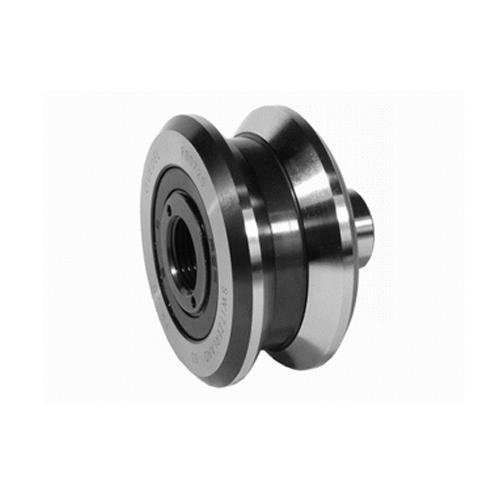
Can track bearings be used in both light-duty and heavy-duty machinery applications?
Yes, track bearings can be used in both light-duty and heavy-duty machinery applications. They are versatile components that offer reliable support for linear motion in a wide range of industrial settings. Here’s a detailed explanation:
1. Light-Duty Machinery Applications:
In light-duty machinery applications, track bearings provide cost-effective and efficient solutions for various tasks. Light-duty track bearings are designed to handle lower loads and are commonly used in applications such as:
- Office automation equipment
- Consumer electronics
- Printing machinery
- Small conveyors and material handling systems
- Automated vending machines
- Textile machinery
These applications typically involve lighter loads and lower operating speeds, making light-duty track bearings suitable for providing smooth and reliable linear motion.
2. Heavy-Duty Machinery Applications:
Track bearings are also widely used in heavy-duty machinery applications that require robust components capable of handling substantial loads and challenging operating conditions. Heavy-duty track bearings are designed to withstand higher loads and offer increased durability. They are commonly employed in applications such as:
- Material handling equipment
- Construction machinery
- Mining equipment
- Transportation systems
- Industrial automation
- Large-scale conveyors
- Steel mills
These applications often involve heavy loads, high operating speeds, and demanding environments. Track bearings in heavy-duty machinery applications are engineered to provide reliable performance, extended service life, and resistance to factors such as contamination, shock, and vibration.
Track bearings are available in various sizes, designs, and load capacities, allowing them to be tailored to the specific requirements of both light-duty and heavy-duty machinery applications. Manufacturers offer a range of options to accommodate different load capacities, operating conditions, and performance specifications.
It is important to consider the specific requirements and operating conditions of the machinery application when selecting track bearings. Consulting with bearing manufacturers or industry experts can help ensure the appropriate track bearings are chosen for optimal performance and reliability in both light-duty and heavy-duty machinery applications.
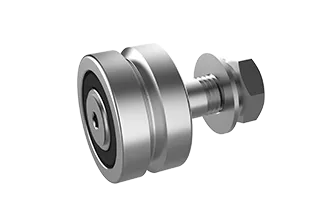
How do track bearings compare to other types of bearings like ball bearings or roller bearings?
Track bearings, ball bearings, and roller bearings are all types of rolling bearings used in various applications. Let’s compare track bearings to ball bearings and roller bearings to understand their similarities and differences:
- Design and Construction: Track bearings, ball bearings, and roller bearings have different designs and constructions. Track bearings, also known as track rollers or track follower bearings, are designed specifically for guided linear or rotational motion along a track or guide rail. They feature an outer ring with a track surface, an inner ring, rolling elements (such as rollers or needles), and a cage. Ball bearings, on the other hand, have spherical rolling elements (balls) sandwiched between inner and outer rings. Roller bearings, as the name suggests, have cylindrical or tapered rolling elements (rollers) between inner and outer rings.
- Motion and Load Handling: Track bearings are primarily used for guided motion in track-based systems, while ball bearings and roller bearings are used for general rotational or linear motion. Track bearings are designed to support both radial and axial loads and provide smooth and controlled motion along the track. Ball bearings and roller bearings are also capable of supporting radial and axial loads but are typically used in applications where the motion is not constrained to a specific track or guide rail. Roller bearings, with their larger contact area and higher load-carrying capacity, are often preferred for applications with higher loads.
- Applications: Track bearings are commonly used in applications such as material handling systems, conveyors, cam mechanisms, automated machinery, construction equipment, and agricultural machinery, where guided motion along a track or rail is required. Ball bearings and roller bearings find applications in a wide range of industries and systems, including electric motors, pumps, automotive applications, industrial machinery, and appliances.
- Friction and Efficiency: Track bearings, ball bearings, and roller bearings all aim to minimize friction and ensure efficient operation. However, due to their different designs and contact surfaces, they exhibit varying levels of friction. Ball bearings typically have lower friction due to point contact between the balls and the raceways. Roller bearings, especially tapered roller bearings, distribute the load over a larger contact area, resulting in slightly higher friction compared to ball bearings. Track bearings, with their track interface, may have slightly higher friction compared to ball bearings or roller bearings due to the rolling elements’ contact with the track surface.
- Installation and Maintenance: Track bearings, ball bearings, and roller bearings require proper installation and maintenance for optimal performance and longevity. However, track bearings may require additional attention during installation as they need to be properly aligned with the track or guide rail. Regular lubrication and periodic inspection are essential for all types of bearings to ensure smooth operation and prevent premature failure.
In summary, track bearings, ball bearings, and roller bearings have distinct designs and applications. Track bearings are specialized for guided motion along a track or rail, while ball bearings and roller bearings are more versatile and used in a wide range of rotational or linear motion applications. Each type of bearing has its advantages and considerations in terms of load handling, friction, efficiency, and installation requirements. Selecting the appropriate bearing type depends on the specific application requirements, load conditions, motion characteristics, and environmental factors.


editor by CX 2024-04-03