Product Description
Parameter:
| Product Name | needle roller bearing |
| Brand Name | KSA |
| Material | Gcr15 |
| Precision Grade | P0,P6,P5 |
| Certification | ISO 9001 |
| Packeage | Box /Carton/Wooden Box/Plastic Tube or Per buyers requirement |
| MOQ | Depending On Moedl |
| Serice | OEM |
| Sample | Available |
| Payment | TT or L/C or Western Union |
| Port | HangZhou ZheJiang HangZhou |
Needle bearings are roller bearings with cylindrical rollers that are thin and long relative to their diameter. Such rollers are called needle rollers. Although it has a small cross-section, the bearing still has a high load-bearing capacity. Needle roller bearings are equipped with thin and long rollers, so the radial structure is compact. When the inner diameter size and load capacity are the same as other types of bearings, the outer diameter is the smallest. It is especially suitable for support structures with limited radial installation dimensions.
Needle bearing is a very important mechanical part, and its application range is very wide. Whether it is automobile, aerospace, machine tool, electric power, metallurgy and other industries, needle roller bearings are needed to support and rotate mechanical parts to ensure the safety and reliability of equipment. Therefore, the quality and performance of needle roller bearings play a vital role in mechanical equipment in all walks of life
Introduction:
Introduce our needle roller bearings to meet your needs!
Want to improve the performance of your industrial machinery? Your search is over! The design of our needle roller bearings offers numerous advantages, making them the perfect choice for your requirements.
1. Excellent accuracy: The precision of our bearings is carefully crafted to ensure minimum friction and optimum performance, thereby increasing the efficiency of your machine.
2. High load capacity: Designed to withstand heavy axial and radial loads, our bearings guarantee reliable operation, even in the most demanding applications.
3. Low maintenance: Say goodbye to frequent downtime and maintenance costs. Our needle roller bearings are durable and reduce the need for replacement.
4. Multi-functional applications: Whether you operate in automotive, manufacturing or any other industry, these bearings are versatile enough to meet a wide range of applications
Bearing classification
Our Advantages
Low noise
Adopting advanced silent manufacturing technology, the product has the characteristics of low noise, low torque, low temperature rise, and is a high-performance bearing with energy saving and environmental protection.
High precision
Through the selection of new materials and special structural design, the product has the characteristics of good sealing performance, small running resistance and high rotation accuracy.
long-life
Seiko hot rolling and expanding technology and special heat treatment process, improve the bearing high temperature resistance, wear resistance, impact resistance, high load characteristics, improve the reliability and service life of the bearing
Company Profile
About us
Specialized production
ZheJiang Kangshi Precision Bearing Manufacturing Co., Ltd., located in Yandian Town Industrial Park, HangZhou City, ZheJiang Province, mainly produces zero deep groove ball bearings, 2 types of cylindrical roller bearings, 3 types of aligning roller bearings, 6 types of angular contact ball bearings, 7 types of tapered roller bearings, 8 types of thrust ball bearings, thrust bearings, 9 types of thrust aligning roller bearings, outer spherical bearings, auto parts, Motorcycle parts and other rolling bearings. Our factory has strong professional technology, good production equipment and perfect testing means, can fully meet the various types, specifications, high precision and special use requirements of bearing products customized processing, the production process of the product according to the strict national standards of enterprise internal control standards for the implementation of full inspection and multi-project comprehensive inspection of factory products, Can ensure the quality of each set of factory bearing products to meet national standards. Kangshi bearing has always implemented national standards, market prices, and implemented the “three guarantees” principle for customers: To ensure high-quality quality, preferential prices, superior after-sales service! Welcome customers at home and abroad to consult and negotiate business, the company will continue to win the trust of more customers with good product quality and reputation.
Scope of application
FAQ
Q: What is the MOQ?
A: It depends on the bearing type. You can send inquiry or send e-mail for more information.
Q: How about the package?
A: Industrial packing in general condition (Plastic drums/boxes/industrial packaging + cartons + pallets). Accept design package when OEM.
Q: How long is the delivery time?
A: It will take about 10 to 40 days, depends on the model and quantity.
Q:What are the advantages of your company’s services compared to other companies?
A: Factory direct supply, price advantage, 24 hours online timely reply, Provide customers with customs clearance
and quality of various documents, 100% after-sales service
Q:OEM POLICY
A:We can printing your brand (logo,artwork)on the bearings or laser engraving your brand on the bearings.
We can custom your packaging according to your design All copyright own by clients and we promised don’t
disclose any info.
Q:How to contact us quickly?
A:Please send us an inquiry or message and leave your other contact information, such as phone number,
account or account, we will contact you as soon as possible and provide the detailed information
you need.
Please feel free to contact us, if you have any other question
/* January 22, 2571 19:08:37 */!function(){function s(e,r){var a,o={};try{e&&e.split(“,”).forEach(function(e,t){e&&(a=e.match(/(.*?):(.*)$/))&&1
| Cage: | With Cage |
|---|---|
| Rows Number: | Single |
| Load Direction: | Radial Bearing |
| Samples: |
US$ 2/Piece
1 Piece(Min.Order) | Order Sample |
|---|
| Customization: |
Available
| Customized Request |
|---|
.shipping-cost-tm .tm-status-off{background: none;padding:0;color: #1470cc}
|
Shipping Cost:
Estimated freight per unit. |
about shipping cost and estimated delivery time. |
|---|
| Payment Method: |
|
|---|---|
|
Initial Payment Full Payment |
| Currency: | US$ |
|---|
| Return&refunds: | You can apply for a refund up to 30 days after receipt of the products. |
|---|
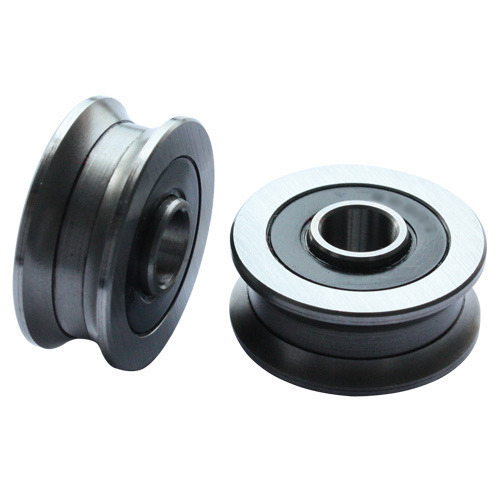
Can you provide examples of industries and applications where track bearings are frequently used?
Track bearings find extensive use in various industries and applications where smooth and controlled motion along tracks or guide rails is required. Let’s explore some examples of industries and applications where track bearings are frequently used:
- Material Handling and Conveying: Track bearings are widely employed in material handling and conveying systems, such as conveyor belts, roller conveyors, and overhead cranes. They facilitate the smooth movement of goods, packages, and components along the tracks, ensuring efficient and reliable transportation within warehouses, distribution centers, manufacturing facilities, and airports.
- Automotive and Transportation: Track bearings are utilized in various automotive applications, including suspension systems, steering systems, and sliding doors. They enable smooth and precise movement of components, contributing to vehicle performance, comfort, and safety. Additionally, track bearings are used in railway applications, such as railcar doors, sliding mechanisms, and track guidance systems.
- Aerospace and Defense: Track bearings play a crucial role in aerospace and defense applications, including aircraft landing gears, flap systems, and missile launchers. They provide the necessary support, guidance, and load-carrying capacity for critical components, ensuring smooth and controlled motion in demanding operating conditions.
- Industrial Machinery: Track bearings are commonly found in various industrial machinery and equipment. They are used in machine tools, robotics, printing presses, industrial ovens, and packaging machines, among others. In these applications, track bearings contribute to precise motion control, accurate positioning, and reliable performance of moving components.
- Construction and Mining: Track bearings are extensively employed in construction and mining equipment, such as excavators, bulldozers, cranes, and drilling machines. They provide support and guidance for the movable parts, allowing efficient and controlled movement in rugged and demanding environments.
- Medical and Healthcare: Track bearings are utilized in various medical and healthcare applications. They are used in hospital beds, medical imaging equipment, laboratory automation systems, and patient handling devices. Track bearings enable smooth and quiet operation, precise positioning, and patient comfort in these critical healthcare settings.
- Renewable Energy: Track bearings are employed in renewable energy systems, including solar tracking systems and wind turbine pitch and yaw mechanisms. They enable the precise tracking of solar panels and the controlled adjustment of wind turbine blades, maximizing energy capture and optimizing system performance.
These examples represent just a fraction of the many industries and applications where track bearings are frequently used. The versatility, reliability, and precise motion control provided by track bearings make them a fundamental component in numerous mechanical systems across various sectors.
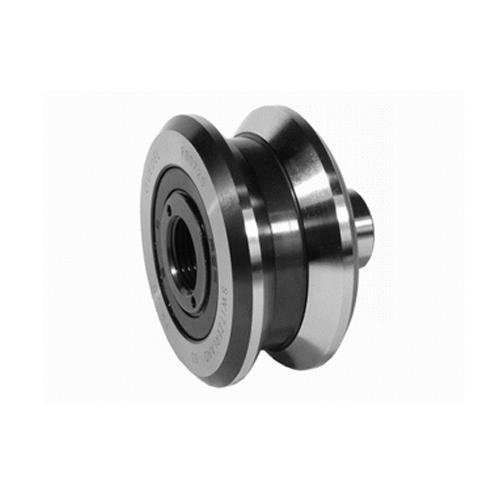
Can track bearings be used in both light-duty and heavy-duty machinery applications?
Yes, track bearings can be used in both light-duty and heavy-duty machinery applications. They are versatile components that offer reliable support for linear motion in a wide range of industrial settings. Here’s a detailed explanation:
1. Light-Duty Machinery Applications:
In light-duty machinery applications, track bearings provide cost-effective and efficient solutions for various tasks. Light-duty track bearings are designed to handle lower loads and are commonly used in applications such as:
- Office automation equipment
- Consumer electronics
- Printing machinery
- Small conveyors and material handling systems
- Automated vending machines
- Textile machinery
These applications typically involve lighter loads and lower operating speeds, making light-duty track bearings suitable for providing smooth and reliable linear motion.
2. Heavy-Duty Machinery Applications:
Track bearings are also widely used in heavy-duty machinery applications that require robust components capable of handling substantial loads and challenging operating conditions. Heavy-duty track bearings are designed to withstand higher loads and offer increased durability. They are commonly employed in applications such as:
- Material handling equipment
- Construction machinery
- Mining equipment
- Transportation systems
- Industrial automation
- Large-scale conveyors
- Steel mills
These applications often involve heavy loads, high operating speeds, and demanding environments. Track bearings in heavy-duty machinery applications are engineered to provide reliable performance, extended service life, and resistance to factors such as contamination, shock, and vibration.
Track bearings are available in various sizes, designs, and load capacities, allowing them to be tailored to the specific requirements of both light-duty and heavy-duty machinery applications. Manufacturers offer a range of options to accommodate different load capacities, operating conditions, and performance specifications.
It is important to consider the specific requirements and operating conditions of the machinery application when selecting track bearings. Consulting with bearing manufacturers or industry experts can help ensure the appropriate track bearings are chosen for optimal performance and reliability in both light-duty and heavy-duty machinery applications.
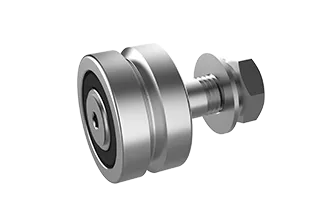
How do track bearings compare to other types of bearings like ball bearings or roller bearings?
Track bearings, ball bearings, and roller bearings are all types of rolling bearings used in various applications. Let’s compare track bearings to ball bearings and roller bearings to understand their similarities and differences:
- Design and Construction: Track bearings, ball bearings, and roller bearings have different designs and constructions. Track bearings, also known as track rollers or track follower bearings, are designed specifically for guided linear or rotational motion along a track or guide rail. They feature an outer ring with a track surface, an inner ring, rolling elements (such as rollers or needles), and a cage. Ball bearings, on the other hand, have spherical rolling elements (balls) sandwiched between inner and outer rings. Roller bearings, as the name suggests, have cylindrical or tapered rolling elements (rollers) between inner and outer rings.
- Motion and Load Handling: Track bearings are primarily used for guided motion in track-based systems, while ball bearings and roller bearings are used for general rotational or linear motion. Track bearings are designed to support both radial and axial loads and provide smooth and controlled motion along the track. Ball bearings and roller bearings are also capable of supporting radial and axial loads but are typically used in applications where the motion is not constrained to a specific track or guide rail. Roller bearings, with their larger contact area and higher load-carrying capacity, are often preferred for applications with higher loads.
- Applications: Track bearings are commonly used in applications such as material handling systems, conveyors, cam mechanisms, automated machinery, construction equipment, and agricultural machinery, where guided motion along a track or rail is required. Ball bearings and roller bearings find applications in a wide range of industries and systems, including electric motors, pumps, automotive applications, industrial machinery, and appliances.
- Friction and Efficiency: Track bearings, ball bearings, and roller bearings all aim to minimize friction and ensure efficient operation. However, due to their different designs and contact surfaces, they exhibit varying levels of friction. Ball bearings typically have lower friction due to point contact between the balls and the raceways. Roller bearings, especially tapered roller bearings, distribute the load over a larger contact area, resulting in slightly higher friction compared to ball bearings. Track bearings, with their track interface, may have slightly higher friction compared to ball bearings or roller bearings due to the rolling elements’ contact with the track surface.
- Installation and Maintenance: Track bearings, ball bearings, and roller bearings require proper installation and maintenance for optimal performance and longevity. However, track bearings may require additional attention during installation as they need to be properly aligned with the track or guide rail. Regular lubrication and periodic inspection are essential for all types of bearings to ensure smooth operation and prevent premature failure.
In summary, track bearings, ball bearings, and roller bearings have distinct designs and applications. Track bearings are specialized for guided motion along a track or rail, while ball bearings and roller bearings are more versatile and used in a wide range of rotational or linear motion applications. Each type of bearing has its advantages and considerations in terms of load handling, friction, efficiency, and installation requirements. Selecting the appropriate bearing type depends on the specific application requirements, load conditions, motion characteristics, and environmental factors.


editor by CX 2024-04-08