Product Description
We are one of the most influential bearing suppliers and professional sales. Our products categories mainly include: Auto bearing , Deep Groove Ball Bearings, Cylindrical Roller Bearings, Tapered Roller Bearings, Thrust Ball Bearings, Self-aligning Ball Bearings, Angular Contact Ball Bearings, Spherical Roller Bearings, Needle Bearings, linear Bearings, Pillow Block Bearings, the Ceramic Bearings, Joint Bearings, Slewing Bearings, Cam Followers Bearings and Electronic Bearings etc.
About the market of our products, except for our domestic market, our products meet to countries all over the world, such as Asia, Africa, South America, Europe, Middle east and etc. Because of the high quality level and good services, are accepted by all clients
Our company offers more than 25,000 different kinds of bearing. In addition, we can supply from stock and have enough stock bearings ready for clients.
We are engaged in exporting brand bearings for many years, such as CZPT bearings, CZPT bearings, CZPT bearings, CZPT bearings, CZPT bearing, and CZPT bearings. Also we are an agency of UBC bearings, GMN bearings and HangZhou CZPT bearings, HangZhou CZPT bearings, HangZhou HRB bearings.
High quality and long life bearings are the aim of IKC Bearings, creatibg the naximum value for customers,our company is pushing forward moden managerment in full aspects and builds up own bearing brand “PLETON”,and will make in known at home and abroad.We will try our best to provide customers with excellent products and services,and are wishing to sincerely cooperate with customers from home and abroad to achieve win-win.
Product Description
Thrust roller bearings are used to withstand combined axial and radial loads that are dominated by axial loads, but the radial load must not exceed 55% of the axial load. Compared with other thrust roller bearings, this kind of bearing has lower friction factor, higher speed, and has self-aligning performance.
The stick of 29000 type bearing is asymmetrical spherical roller, which can reduce the relative sliding of roller and raceway in work, and the roller is long and large in diameter, the number of rollers is large, the load capacity is high, and it is usually lubricated by oil. Grease can be used for individual low-speed conditions. In the design and selection, it should be preferred; Type 80000 thrust cylindrical roller bearings, type 90000 thrust tapered roller bearings and AXK type thrust needle roller bearings can withstand one-way axial load. It has a much larger axial load capacity than thrust ball bearings, and has greater rigidity. Occupies little axial space.
A wide range of applications:
• agriculture and forestry equipment
• automotive and industrial gearboxes
• automotive and truck electric components, such as alternators
• electric motors
• fluid machinery
• material handling
• power tools and household appliances
• textile machinery
• two Wheeler.
Our Bearing Advantage:
1.Free Sample bearing
2.ISO Standard
3.Bearing Small order accepted
4.In Stock bearing
5.OEM bearing service
6.Professional:16 years manufacture bearing
7.Customized bearing, Customer’s bearing drawing or samples accepted
8.Competitive price bearing
9.TT Payment or Western Union or Trade Assurance Order
| Model | Dimension (mm) | Weight (KG) | Model | Dimension(mm) | Weight (KG) |
| 81120 | 100 × 135 × 25 | 1 | 81211 | 55 × 90 × 25 | 0.708 |
| 81122 | 110 × 145 × 25 | 1.1 | 81212 | 60 × 95 × 26 | 0.64 |
| 81124 | 120 × 155 × 25 | 1.23 | 81213 | 65 × 100 × 27 | 0.874 |
| 81126 | 130 × 170 × 30 | 1.7 | 81214 | 70 × 105 × 27 | 0.77 |
| 81128 | 140 × 180 × 31 | 1.95 | 81215 | 75 × 110 × 27 | 0.979 |
| 81130 | 150 × 190 × 31 | 2.05 | 81216 | 80 × 115 × 28 | 0.9 |
| 81132 | 160 × 200 × 31 | 2.2 | 81217 | 85 × 125 × 31 | 1.44 |
| 81134 | 170 × 215 × 34 | 2.95 | 81218 | 90 × 135 × 35 | 1.75 |
| 81136 | 180 × 225 × 34 | 3.05 | 81220 | 100 × 150 × 38 | 2.58 |
| 81140 | 200 × 250 × 37 | 3.74 | 81222 | 110 × 160 × 38 | – |
| 81140/YA | 200 × 250 × 37 | 4.28 | 81222M | 110 × 160 × 38 | 2.8 |
| 81188 | 440 × 540 × 80 | 41.5 | 81224 | 120 × 170 × 39 | 2.7 |
| 811/530 | 530 × 640 × 85 | 55.5 | 81224M | 120 × 170 × 39 | 2.94 |
| 811/850 | 850 × 1000 × 120 | 177.15 | 81226 | 130 × 190 × 45 | 4.29 |
| 81206 | 30 × 52 × 16 | 0.12 | 81228 | 140 × 200 × 46 | 4.55 |
| 81207 | 35 × 62 × 18 | 0.2 | 81230 | 150 × 215 × 50 | 5.9 |
| 81208 | 40 × 68 × 19 | 0.27 | 81232EA | 160 × 225 × 51 | – |
| 81209 | 45 × 73 × 20 | 0.3 | 81232 | 160 × 225 × 51 | 6.2 |
| 81210 | 50 × 78 × 22 | 0.43 | 81234 | 170 × 240 × 55 | 7.7 |
| 81240 | 200 × 280 × 62 | 13.7 | 81236 | 180 × 250 × 56 | 8.25 |
WHY CHOOSE US?
NO.1 We provide our customers the most Comprehensive service and we’ll do our best to deal with problems our customers encountered to ensure our customers SATISFACTION
NO.2 The high quality of our products means that it has long life, high speed, low noise, low vibration and low friction
NO.3 Be honesty, be professional is our faith; good attitude, timely response, quick delivery, consideration of every detail is our working style
NO.4 Manufactured by ourself, enough storage space, enough inventory, high producing efficiency we possess, the most favorable price we offer to our customers makes sure every deal have a happy end
FAQ
Q: How many the MOQ of your company?
A: Our company MOQ is 1pcs.
Q: Could you accept OEM and customize?
A:YES, we can customize for you according to sample or drawing.
Q: Could you supply sample for free?
A: Yes, we can supply sample for free, but need our customer afford freight.
Q : Does your factory have CE?
A: Yes, we have ISO 9001:2015, and SASO. If you want other CE, we can do for you.
Q: Is it your company is factory or Trade Company?
A: We have our own factory; And we export bearing for 20 years to all over the world.
Q: What time the guarantee of your bearing quality guarantee period?
A: 6 months ,Customer need supply photos and send bearing back.
Q: Could you tell me the payment term of your company can accept?
A: T/T, D/P,L/C
Q: Could you tell me the delivery time of your goods?
A: 7-15 days , mostly base on your order quantity
/* January 22, 2571 19:08:37 */!function(){function s(e,r){var a,o={};try{e&&e.split(“,”).forEach(function(e,t){e&&(a=e.match(/(.*?):(.*)$/))&&1
| Structure: | Thrust |
|---|---|
| Type: | Roller |
| Brand Name: | as Your Requirement |
| Customization: |
Available
| Customized Request |
|---|
.shipping-cost-tm .tm-status-off{background: none;padding:0;color: #1470cc}
|
Shipping Cost:
Estimated freight per unit. |
about shipping cost and estimated delivery time. |
|---|
| Payment Method: |
|
|---|---|
|
Initial Payment Full Payment |
| Currency: | US$ |
|---|
| Return&refunds: | You can apply for a refund up to 30 days after receipt of the products. |
|---|
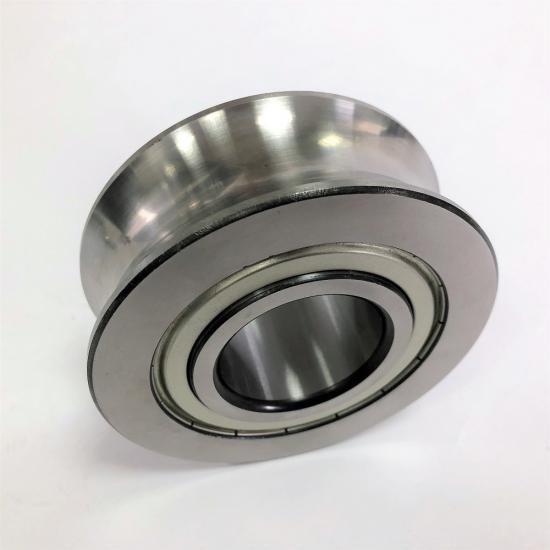
Can track bearings be customized or modified for specific track or linear motion applications?
Yes, track bearings can be customized or modified to meet specific requirements of track or linear motion applications. Manufacturers often offer a range of options and capabilities to tailor track bearings to the unique needs of different industries and applications. Here are some ways in which track bearings can be customized or modified:
- Size and Dimensional Variations: Track bearings can be customized in terms of size, diameter, width, and overall dimensions to fit specific track or linear motion systems. Manufacturers can provide bearings with varying sizes and load capacities to accommodate different application requirements.
- Material Selection: Track bearings can be manufactured from various materials depending on the specific application’s demands. Common materials include steel, stainless steel, ceramic, and polymer composites. Material selection can be customized to achieve desired properties such as corrosion resistance, high temperature tolerance, or low friction.
- Sealing and Protection: In applications where track bearings are exposed to contaminants, moisture, or harsh environments, customized sealing and protection features can be added. These may include additional seals, shields, or coatings to enhance the bearing’s resistance to dust, water, chemicals, or extreme temperatures.
- Lubrication Options: While self-lubricating or maintenance-free track bearings offer convenience, applications with specific lubrication requirements may benefit from customized lubrication options. Manufacturers can modify the bearing design to accommodate external lubrication systems or provide alternative lubrication methods to meet the unique demands of the application.
- Specialized Load and Speed Ratings: In certain applications, track bearings may need to handle exceptionally high loads or operate at high speeds. Manufacturers can customize the bearing design to offer specialized load and speed ratings to ensure optimal performance and reliability in such demanding conditions.
- Mounting and Attachment Options: Track bearings can be customized with different mounting and attachment options to facilitate easy installation and integration into specific track or linear motion systems. This may include variations in bolt hole patterns, flange designs, or specialized mounting arrangements.
- Track Geometry Compatibility: Track bearings can be designed or modified to match specific track or guide rail geometries. This ensures proper fit, alignment, and smooth operation along the designated track, minimizing the risk of misalignment or issues related to track compatibility.
It is important to work closely with bearing manufacturers or suppliers to discuss the specific requirements of the track or linear motion application. By collaborating with experts, it is possible to customize or modify track bearings to optimize performance, reliability, and longevity in a wide range of applications.
What innovations or advancements have been made in track bearing technology?
Track bearing technology has seen several innovations and advancements over the years, driven by the need for improved performance, increased reliability, and enhanced functionality. Here are some notable innovations in track bearing technology:
- Advanced Materials: The development of new materials has significantly improved the performance and longevity of track bearings. Materials such as ceramic, hybrid ceramics, and high-performance steels offer enhanced strength, corrosion resistance, and temperature stability, making them suitable for demanding applications.
- Improved Sealing Solutions: Sealing technology has advanced to provide better protection against contaminants, moisture, and other environmental factors. Innovative seal designs and materials, including labyrinth seals, triple lip seals, and specialized coatings, help keep track bearings clean and extend their service life.
- Enhanced Lubrication: Lubrication plays a crucial role in the performance and lifespan of track bearings. Advancements in lubrication technology, such as the development of high-performance greases and solid lubricants, have improved the efficiency, reliability, and maintenance requirements of track bearings.
- Integrated Sensor Systems: Track bearings can now incorporate integrated sensor systems to monitor various parameters such as temperature, vibration, and load. These sensors provide real-time data on bearing health and performance, enabling predictive maintenance strategies and early detection of potential issues.
- Smart Bearing Technology: Smart bearing technology combines sensor systems with advanced data analytics and connectivity capabilities. These bearings can communicate wirelessly with monitoring systems, enabling remote monitoring, condition-based maintenance, and optimization of operational parameters for improved performance and efficiency.
- Design Optimization: Computer-aided design (CAD) and finite element analysis (FEA) tools have revolutionized the design process for track bearings. These tools allow for precise modeling, simulation, and optimization of bearing geometries, materials, and load capacities, resulting in improved performance, reduced weight, and enhanced reliability.
- Application-Specific Customization: With advancements in manufacturing processes, track bearings can now be customized to meet the specific requirements of different applications. Manufacturers can tailor bearing designs, materials, and coatings to optimize performance, reliability, and compatibility with unique operating conditions.
These innovations and advancements in track bearing technology have collectively contributed to improved performance, extended service life, and enhanced functionality in a wide range of industries and applications. They continue to drive progress in the field, enabling track bearings to meet the evolving demands of modern industrial systems.
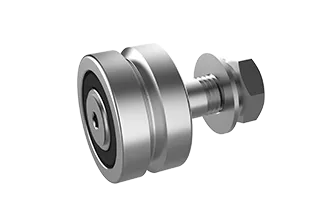
How do track bearings compare to other types of bearings like ball bearings or roller bearings?
Track bearings, ball bearings, and roller bearings are all types of rolling bearings used in various applications. Let’s compare track bearings to ball bearings and roller bearings to understand their similarities and differences:
- Design and Construction: Track bearings, ball bearings, and roller bearings have different designs and constructions. Track bearings, also known as track rollers or track follower bearings, are designed specifically for guided linear or rotational motion along a track or guide rail. They feature an outer ring with a track surface, an inner ring, rolling elements (such as rollers or needles), and a cage. Ball bearings, on the other hand, have spherical rolling elements (balls) sandwiched between inner and outer rings. Roller bearings, as the name suggests, have cylindrical or tapered rolling elements (rollers) between inner and outer rings.
- Motion and Load Handling: Track bearings are primarily used for guided motion in track-based systems, while ball bearings and roller bearings are used for general rotational or linear motion. Track bearings are designed to support both radial and axial loads and provide smooth and controlled motion along the track. Ball bearings and roller bearings are also capable of supporting radial and axial loads but are typically used in applications where the motion is not constrained to a specific track or guide rail. Roller bearings, with their larger contact area and higher load-carrying capacity, are often preferred for applications with higher loads.
- Applications: Track bearings are commonly used in applications such as material handling systems, conveyors, cam mechanisms, automated machinery, construction equipment, and agricultural machinery, where guided motion along a track or rail is required. Ball bearings and roller bearings find applications in a wide range of industries and systems, including electric motors, pumps, automotive applications, industrial machinery, and appliances.
- Friction and Efficiency: Track bearings, ball bearings, and roller bearings all aim to minimize friction and ensure efficient operation. However, due to their different designs and contact surfaces, they exhibit varying levels of friction. Ball bearings typically have lower friction due to point contact between the balls and the raceways. Roller bearings, especially tapered roller bearings, distribute the load over a larger contact area, resulting in slightly higher friction compared to ball bearings. Track bearings, with their track interface, may have slightly higher friction compared to ball bearings or roller bearings due to the rolling elements’ contact with the track surface.
- Installation and Maintenance: Track bearings, ball bearings, and roller bearings require proper installation and maintenance for optimal performance and longevity. However, track bearings may require additional attention during installation as they need to be properly aligned with the track or guide rail. Regular lubrication and periodic inspection are essential for all types of bearings to ensure smooth operation and prevent premature failure.
In summary, track bearings, ball bearings, and roller bearings have distinct designs and applications. Track bearings are specialized for guided motion along a track or rail, while ball bearings and roller bearings are more versatile and used in a wide range of rotational or linear motion applications. Each type of bearing has its advantages and considerations in terms of load handling, friction, efficiency, and installation requirements. Selecting the appropriate bearing type depends on the specific application requirements, load conditions, motion characteristics, and environmental factors.


editor by CX 2024-04-09