Product Description
Door & Window Roller
The roller wheels are usually made of 2 parts, 1 is the inside bearing and the other is the plastic shell covered on the bearing.
Bearing Material: Chrome Steel (GCr15), Carbon Steel
Sheel Material: Nylon, Imported POM, PA66, TPE, PU, etc.
Size: Customized based on buyer’s drawing or samples.
OEM Service: Custom material, size, logo, packing.
Certificate: CE
Picture Display:
Packing:
|
Universal Packing |
Without any logo on bearings or packing. |
|
HXHV Packing |
With our brand HXHV on bearings and packing. |
|
Customized Packing |
Depends on buyer’s requirements. |
Certificate:
Our bearings comes with CE certificate and our company has been verified by SGS Group. Please contact us for clear certificate photos.
Other Bearings:
We supply different types of ball and roller bearings, slewing bearings, mini bearings, ceramic bearings, Linear guides.
To get the exact price, please contact us. /* January 22, 2571 19:08:37 */!function(){function s(e,r){var a,o={};try{e&&e.split(“,”).forEach(function(e,t){e&&(a=e.match(/(.*?):(.*)$/))&&1
| After-sales Service: | Yes |
|---|---|
| Warranty: | Yes |
| Certification: | CE, SGS |
| Splittable: | Unsplittable |
| Surface Treatment: | Polished |
| Material: | Steel |
| Samples: |
US$ 2/Piece
1 Piece(Min.Order) | |
|---|
| Customization: |
Available
| Customized Request |
|---|
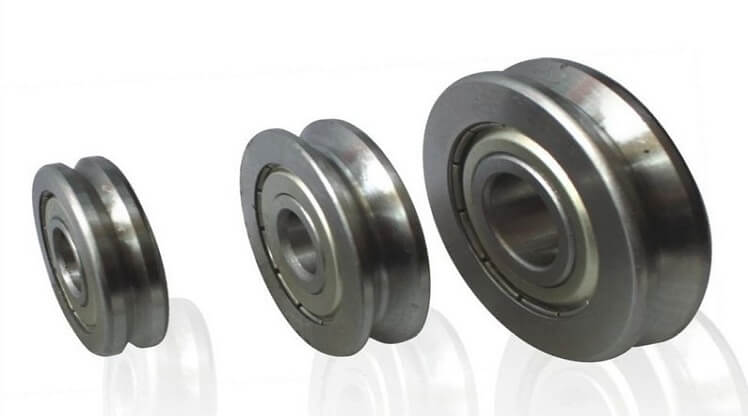
Can you explain the maintenance and lubrication requirements for track bearings?
Maintenance and lubrication are essential aspects of ensuring the optimal performance and longevity of track bearings. Proper maintenance practices and appropriate lubrication help minimize wear, reduce friction, prevent corrosion, and extend the service life of the bearings. Here’s an explanation of the maintenance and lubrication requirements for track bearings:
Maintenance Requirements:
- Cleanliness: It is crucial to maintain a clean operating environment for track bearings. Regularly remove dirt, dust, and debris from the track and bearing surfaces to prevent contamination, which can lead to premature wear and damage.
- Inspection: Periodically inspect the track bearings for signs of wear, damage, or misalignment. Check for excessive play, noise, or roughness during operation. If any issues are detected, take appropriate measures such as bearing replacement or realignment to ensure optimal performance.
- Tightening and Fasteners: Check the tightness of fasteners, such as bolts or screws, that secure the track bearings. Loose fasteners can lead to misalignment or instability. Ensure that all fasteners are properly tightened according to the manufacturer’s specifications.
- Track Alignment: Proper track alignment is crucial for smooth and efficient operation of track bearings. Regularly check the alignment of the track or guide rails and make necessary adjustments to maintain proper alignment, minimizing excessive loads and wear on the bearings.
- Load Limits: Adhere to the specified load limits for the track bearings. Exceeding the recommended load capacity can cause premature wear and failure. Consider the dynamic and static load ratings of the bearings to ensure they are not subjected to excessive loads that can compromise their performance.
Lubrication Requirements:
- Proper Lubricant Selection: Select the appropriate lubricant based on the operating conditions, such as temperature, load, and speed. Consult the manufacturer’s recommendations or seek expert advice to ensure the lubricant’s compatibility with the track bearings and the specific application.
- Regular Lubrication: Follow a regular lubrication schedule as recommended by the manufacturer. This may involve applying lubricant at specified intervals or based on the operating hours. Adequate lubrication helps minimize friction, reduce wear, and maintain proper functioning of the track bearings.
- Correct Lubrication Method: Apply the lubricant using the appropriate method, whether it’s manual greasing, automatic lubrication systems, or specialized lubrication techniques. Ensure that the lubricant reaches all necessary contact points and provides sufficient coverage to the bearing surfaces.
- Monitoring and Replenishment: Monitor the lubricant levels regularly and replenish as needed. In some cases, track bearings may have built-in lubrication systems that require periodic refilling or maintenance. Keep track of the lubricant condition and replace it when it becomes contaminated or degraded.
- Environmental Considerations: Consider the operating environment when selecting the lubricant. Extreme temperatures, exposure to moisture, or the presence of chemicals or contaminants may require special lubricants that can withstand these conditions and provide effective protection and lubrication.
It is important to consult the manufacturer’s guidelines and recommendations specific to the track bearings being used. Following the recommended maintenance and lubrication practices ensures optimal performance, reduces the risk of premature failure, and maximizes the overall lifespan of the track bearings.
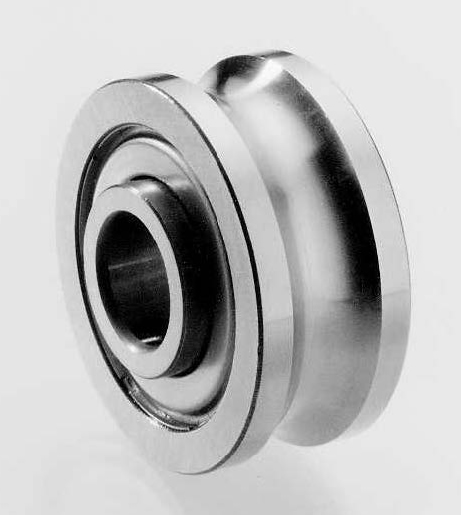
Are there potential challenges or limitations in using track bearings in specific industries?
While track bearings are widely used in various industries for their ability to support linear motion and handle heavy loads, there can be potential challenges and limitations associated with their use in specific industries. Here’s a detailed explanation:
1. Contamination and Harsh Environments:
Industries such as mining, construction, and agriculture often operate in harsh environments with high levels of contamination, including dust, dirt, and moisture. These contaminants can enter the track bearings and cause accelerated wear, reduced performance, and potential failure. Regular maintenance and appropriate sealing measures are required to mitigate these challenges.
2. High-Temperature Environments:
In industries like metal processing, glass manufacturing, and foundries, track bearings may be exposed to high temperatures. Excessive heat can affect the lubrication properties and structural integrity of bearings, leading to premature failure. Selecting track bearings specifically designed for high-temperature applications and using suitable lubricants are necessary to overcome this limitation.
3. Corrosive Chemicals:
Industries such as chemical processing, food and beverage, and wastewater treatment involve exposure to corrosive chemicals. Corrosion can significantly affect the performance and lifespan of track bearings. Choosing bearings made from corrosion-resistant materials or applying protective coatings can help address this challenge.
4. Heavy Load and Impact:
Industries like material handling, mining, and construction often require track bearings to withstand heavy loads and frequent impacts. Excessive load or impact can lead to premature wear, deformation, or even catastrophic failure of the bearings. Selecting track bearings with appropriate load capacities and impact resistance is crucial in these industries.
5. Precision and Accuracy:
In industries such as robotics, semiconductor manufacturing, and precision machining, track bearings may need to meet stringent requirements for precision and accuracy. Any deviation or play in the bearings can impact the overall performance and quality of the process. Using high-precision track bearings and ensuring proper alignment and installation are essential in these cases.
6. Speed and Acceleration:
Applications involving high-speed or rapid acceleration, such as automated assembly lines or conveyor systems, can impose additional challenges on track bearings. Excessive speed or acceleration can generate heat and vibration, leading to increased wear and reduced bearing life. Choosing track bearings with suitable speed and acceleration ratings is vital in these industries.
It is important to consult with bearing manufacturers or industry experts to identify and address any potential challenges or limitations specific to the industry and application at hand. By understanding these challenges and selecting track bearings designed to overcome them, industries can optimize performance, reliability, and longevity while mitigating risks and ensuring smooth operation.
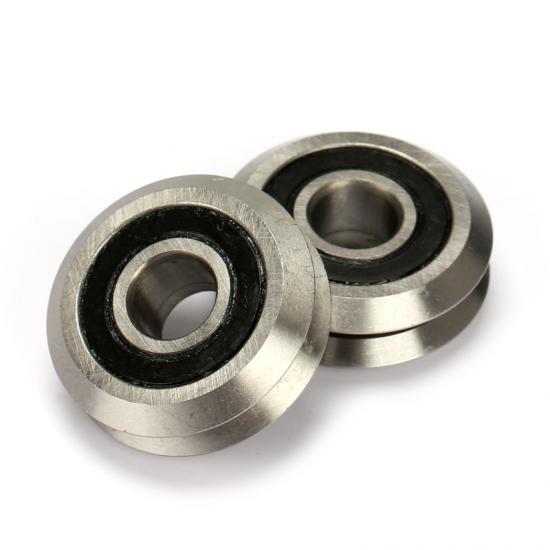
Can you describe the load-carrying capacity and load ratings of track bearings?
Track bearings are designed to withstand and carry various types of loads while maintaining smooth and controlled motion along a track or guide rail. The load-carrying capacity and load ratings of track bearings are crucial factors to consider when selecting the appropriate bearing for a specific application. Let’s delve into these concepts:
Load-Carrying Capacity:
The load-carrying capacity of a track bearing refers to its ability to support and distribute the applied loads without excessive deformation or failure. It is influenced by several factors, including the bearing’s design, materials, and operating conditions. The load-carrying capacity is typically specified in terms of static load capacity and dynamic load capacity.
The static load capacity indicates the maximum load that a track bearing can support without permanent deformation. It is determined by the bearing’s internal geometry, material strength, and the contact area between the rolling elements and raceways. Static loads are those that do not cause relative motion between the bearing and the track, such as when the bearing is stationary or subjected to a constant load.
The dynamic load capacity represents the maximum load that a track bearing can handle while still allowing smooth rolling motion. It takes into account the bearing’s ability to handle both radial and axial loads and considers factors such as the bearing’s internal clearance, lubrication, and operating speed. Dynamic loads are those that cause relative motion between the bearing and the track, such as when the bearing is subjected to varying loads or subjected to motion along the track.
Load Ratings:
Load ratings provide standardized values that indicate the maximum allowable loads for track bearings based on industry standards. These load ratings are commonly provided by bearing manufacturers and help users select the appropriate bearing for their specific application requirements. The two primary load ratings used for track bearings are the radial load rating and the axial load rating.
The radial load rating specifies the maximum radial load that a track bearing can withstand while maintaining proper performance and service life. It is expressed as a static load rating and a dynamic load rating. The static radial load rating indicates the maximum radial load that the bearing can support without permanent deformation, while the dynamic radial load rating represents the maximum radial load that the bearing can handle under typical operating conditions.
The axial load rating indicates the maximum axial load that a track bearing can withstand without excessive deformation or failure. It considers the applied axial force in the direction perpendicular to the track or guide rail. The axial load rating is typically provided as a static load rating and a dynamic load rating.
It’s important to note that load ratings are based on specific operating conditions, such as a certain speed, lubrication, and temperature. It is necessary to consider the actual operating conditions and factors such as shock loads, vibrations, and misalignments when applying load ratings to real-world applications.
By understanding the load-carrying capacity and load ratings of track bearings, engineers and designers can make informed decisions to ensure reliable and safe performance of the bearings in their applications.


editor by CX 2024-04-11