Product Description
We supply OEM Service including bearing’s size logo and packing. CE Certificate.
Welcome to contact us for the factory wholesale price.
We supply service as below:
1, OEM service, custom bearing’s size, logo and packing.
2, CE certificate, EPR certificate. SGS report.
3, One year warranty.
4, Competitive wholesale price.
5, Short lead-time and fast delivery.
6, Free sample for regular customers. New buyer can get part bearings as free sample.
The metric series of tapered roller bearings are widely used in military industry, aviation, machinery, automobile, metallurgy, mining, railway and other fields. Its main applications include the following aspects:
1. Automobiles and vehicles: Tapered roller bearings are used in axles, transmission systems, engines, transmissions and other components, which can withstand large axial and radial loads while ensuring stable speed and smooth driving.
2. Machine tools and industrial equipment: Tapered roller bearings are suitable for high-speed rotating and high-precision processing machine tools and equipment, such as milling machines, grinding machines, CNC machine tools, etc., which can reduce vibration, reduce noise, and improve equipment accuracy and reliability.
3. Agricultural and gardening machinery: Tapered roller bearings can be used in rotors, fan blades, harvesters and other equipment in agricultural machinery and gardening machinery. Due to their excellent structural bearing capacity and wear resistance, they can adapt to various working environments.
4. Railway and aerospace: Tapered roller bearings are widely used in high-speed trains, large airport equipment and aircraft landing gear, etc., with high load capacity and stability, and can ensure safe and reliable operation.
5. Mining and construction engineering: Tapered roller bearings can be used in heavy equipment such as mining equipment, excavating machinery and hoisting machinery. They have strong bearing capacity and good durability, and can effectively improve production efficiency and safety.
/* January 22, 2571 19:08:37 */!function(){function s(e,r){var a,o={};try{e&&e.split(“,”).forEach(function(e,t){e&&(a=e.match(/(.*?):(.*)$/))&&1
| Cage: | With Cage |
|---|---|
| Rows Number: | Single |
| Load Direction: | Radial Bearing |
| Style: | Without Outer Ring |
| Material: | Bearing Steel |
| Type: | Closed |
| Samples: |
US$ 7.5/Piece
1 Piece(Min.Order) | |
|---|
| Customization: |
Available
| Customized Request |
|---|
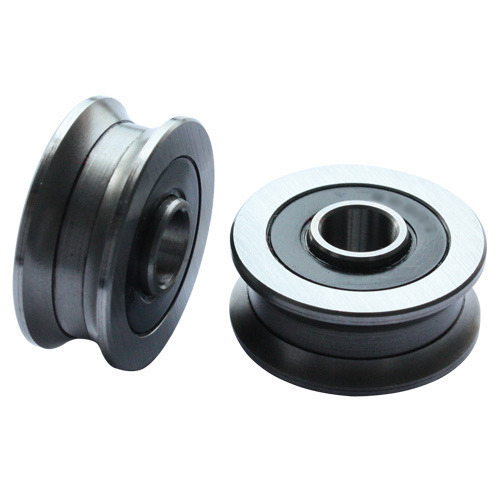
Can you provide examples of industries and applications where track bearings are frequently used?
Track bearings find extensive use in various industries and applications where smooth and controlled motion along tracks or guide rails is required. Let’s explore some examples of industries and applications where track bearings are frequently used:
- Material Handling and Conveying: Track bearings are widely employed in material handling and conveying systems, such as conveyor belts, roller conveyors, and overhead cranes. They facilitate the smooth movement of goods, packages, and components along the tracks, ensuring efficient and reliable transportation within warehouses, distribution centers, manufacturing facilities, and airports.
- Automotive and Transportation: Track bearings are utilized in various automotive applications, including suspension systems, steering systems, and sliding doors. They enable smooth and precise movement of components, contributing to vehicle performance, comfort, and safety. Additionally, track bearings are used in railway applications, such as railcar doors, sliding mechanisms, and track guidance systems.
- Aerospace and Defense: Track bearings play a crucial role in aerospace and defense applications, including aircraft landing gears, flap systems, and missile launchers. They provide the necessary support, guidance, and load-carrying capacity for critical components, ensuring smooth and controlled motion in demanding operating conditions.
- Industrial Machinery: Track bearings are commonly found in various industrial machinery and equipment. They are used in machine tools, robotics, printing presses, industrial ovens, and packaging machines, among others. In these applications, track bearings contribute to precise motion control, accurate positioning, and reliable performance of moving components.
- Construction and Mining: Track bearings are extensively employed in construction and mining equipment, such as excavators, bulldozers, cranes, and drilling machines. They provide support and guidance for the movable parts, allowing efficient and controlled movement in rugged and demanding environments.
- Medical and Healthcare: Track bearings are utilized in various medical and healthcare applications. They are used in hospital beds, medical imaging equipment, laboratory automation systems, and patient handling devices. Track bearings enable smooth and quiet operation, precise positioning, and patient comfort in these critical healthcare settings.
- Renewable Energy: Track bearings are employed in renewable energy systems, including solar tracking systems and wind turbine pitch and yaw mechanisms. They enable the precise tracking of solar panels and the controlled adjustment of wind turbine blades, maximizing energy capture and optimizing system performance.
These examples represent just a fraction of the many industries and applications where track bearings are frequently used. The versatility, reliability, and precise motion control provided by track bearings make them a fundamental component in numerous mechanical systems across various sectors.
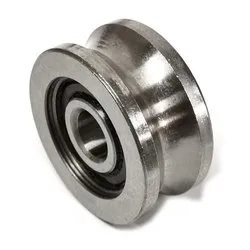
What innovations or advancements have been made in track bearing technology?
Track bearing technology has seen several innovations and advancements over the years, driven by the need for improved performance, increased reliability, and enhanced functionality. Here are some notable innovations in track bearing technology:
- Advanced Materials: The development of new materials has significantly improved the performance and longevity of track bearings. Materials such as ceramic, hybrid ceramics, and high-performance steels offer enhanced strength, corrosion resistance, and temperature stability, making them suitable for demanding applications.
- Improved Sealing Solutions: Sealing technology has advanced to provide better protection against contaminants, moisture, and other environmental factors. Innovative seal designs and materials, including labyrinth seals, triple lip seals, and specialized coatings, help keep track bearings clean and extend their service life.
- Enhanced Lubrication: Lubrication plays a crucial role in the performance and lifespan of track bearings. Advancements in lubrication technology, such as the development of high-performance greases and solid lubricants, have improved the efficiency, reliability, and maintenance requirements of track bearings.
- Integrated Sensor Systems: Track bearings can now incorporate integrated sensor systems to monitor various parameters such as temperature, vibration, and load. These sensors provide real-time data on bearing health and performance, enabling predictive maintenance strategies and early detection of potential issues.
- Smart Bearing Technology: Smart bearing technology combines sensor systems with advanced data analytics and connectivity capabilities. These bearings can communicate wirelessly with monitoring systems, enabling remote monitoring, condition-based maintenance, and optimization of operational parameters for improved performance and efficiency.
- Design Optimization: Computer-aided design (CAD) and finite element analysis (FEA) tools have revolutionized the design process for track bearings. These tools allow for precise modeling, simulation, and optimization of bearing geometries, materials, and load capacities, resulting in improved performance, reduced weight, and enhanced reliability.
- Application-Specific Customization: With advancements in manufacturing processes, track bearings can now be customized to meet the specific requirements of different applications. Manufacturers can tailor bearing designs, materials, and coatings to optimize performance, reliability, and compatibility with unique operating conditions.
These innovations and advancements in track bearing technology have collectively contributed to improved performance, extended service life, and enhanced functionality in a wide range of industries and applications. They continue to drive progress in the field, enabling track bearings to meet the evolving demands of modern industrial systems.
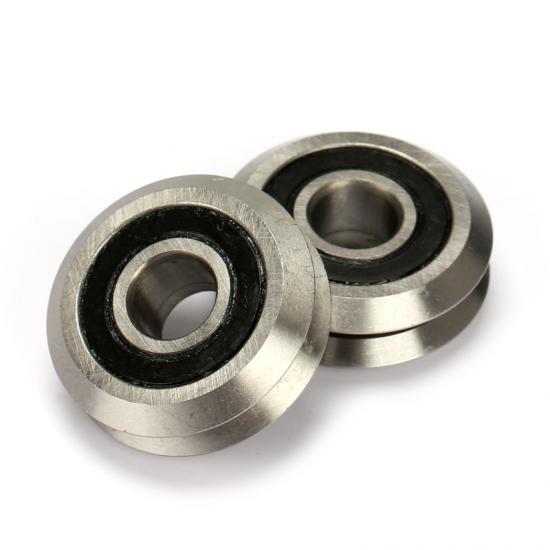
Can you describe the load-carrying capacity and load ratings of track bearings?
Track bearings are designed to withstand and carry various types of loads while maintaining smooth and controlled motion along a track or guide rail. The load-carrying capacity and load ratings of track bearings are crucial factors to consider when selecting the appropriate bearing for a specific application. Let’s delve into these concepts:
Load-Carrying Capacity:
The load-carrying capacity of a track bearing refers to its ability to support and distribute the applied loads without excessive deformation or failure. It is influenced by several factors, including the bearing’s design, materials, and operating conditions. The load-carrying capacity is typically specified in terms of static load capacity and dynamic load capacity.
The static load capacity indicates the maximum load that a track bearing can support without permanent deformation. It is determined by the bearing’s internal geometry, material strength, and the contact area between the rolling elements and raceways. Static loads are those that do not cause relative motion between the bearing and the track, such as when the bearing is stationary or subjected to a constant load.
The dynamic load capacity represents the maximum load that a track bearing can handle while still allowing smooth rolling motion. It takes into account the bearing’s ability to handle both radial and axial loads and considers factors such as the bearing’s internal clearance, lubrication, and operating speed. Dynamic loads are those that cause relative motion between the bearing and the track, such as when the bearing is subjected to varying loads or subjected to motion along the track.
Load Ratings:
Load ratings provide standardized values that indicate the maximum allowable loads for track bearings based on industry standards. These load ratings are commonly provided by bearing manufacturers and help users select the appropriate bearing for their specific application requirements. The two primary load ratings used for track bearings are the radial load rating and the axial load rating.
The radial load rating specifies the maximum radial load that a track bearing can withstand while maintaining proper performance and service life. It is expressed as a static load rating and a dynamic load rating. The static radial load rating indicates the maximum radial load that the bearing can support without permanent deformation, while the dynamic radial load rating represents the maximum radial load that the bearing can handle under typical operating conditions.
The axial load rating indicates the maximum axial load that a track bearing can withstand without excessive deformation or failure. It considers the applied axial force in the direction perpendicular to the track or guide rail. The axial load rating is typically provided as a static load rating and a dynamic load rating.
It’s important to note that load ratings are based on specific operating conditions, such as a certain speed, lubrication, and temperature. It is necessary to consider the actual operating conditions and factors such as shock loads, vibrations, and misalignments when applying load ratings to real-world applications.
By understanding the load-carrying capacity and load ratings of track bearings, engineers and designers can make informed decisions to ensure reliable and safe performance of the bearings in their applications.


editor by CX 2024-04-24