Product Description
LR50/5 LR50/8-2RS LR50/6 LR50/6-2RS LR50/7-2RS LR50/7 LR50/8 LR50/8-2RS LR5 (LR5R 361202R 361203R 361204R 361205R 361206R 3067C-2Z 306702C-2Z 306703C2Z 306704C-2Z 306705C-2Z 306706C-2Z 306707C-2Z 306708C-2Z 3068C-2Z 306802C-2Z 306803C-2Z 306804C-2Z 306805C-2Z 306806C-2Z 306807C-2Z 306838C-2Z LR200-2RS LR202-2RS LR202-2RS LR203-2RS LR204-2RS
LR205-2RS LR206-2RS LR207-2RS LR606NPPU LR607NPPU LR608NPPU LR6000NPPU LR6001NPPU LR6002NPPU LR6003NPPU LR6004NPPU LR50/5NPPU LR50/6NPPU LR50/7NPPU LR50/8NPPU LR5000NPPU LR5001NPPU LR5002NPPU LR5003NPPU LR5004NPPU LR5005NPPU LR5006NPPU LR5008NPPU
LR5200NPPU LR5201NPPU LR5202NPPU LR5203NPPU LR5204NPPU LR5205NPPU LR5206NPPU LR5207NPPU LR5200KDDU LR5201KDDU LR5202KDDU LR5203KDDU LR5204KDDU LR5205KDDU LR5206KDDU LR5207KDDU LR5300-2RS,LR5301-2RS,LR5302-2RS,LR5303-2RS LR5304-2RS, LR5305-2RS,LR5306-2RS,LR5307-2RS,LR5308-2RS (2RS,2Z,KDD,NPP)
ZKLN0619-2 ZKLN1034-2 ZKLN0624-2 ZKLN1034-2 ZKLN1545-2 ZKLN1545-2 ZKLN 0571 -2 ZKLN1242-2 ZKLN2557-2 ZKLN1545-2 ZKLN3572-2 ZKLN1747-2 ZKLN3062-2 ZKLN4075-2 ZKLN5090-2 ZKLN60110-2 ZKLN3072-2 ZKLN80130-2 ZKLN50110-2 ZKLN0624-2Z ZKLN5090-2 ZKLN70120-2 ZKLN90150-2 ZKLN100160-2
OUR PROMISES
Product quality standards are guaranteed. Our products have got ISO 9001 & CE international quality management system. They all produced with best advanced technology.We are proactive and we offer only products complying with top standards of quality and warranty. /* January 22, 2571 19:08:37 */!function(){function s(e,r){var a,o={};try{e&&e.split(“,”).forEach(function(e,t){e&&(a=e.match(/(.*?):(.*)$/))&&1
| Cage: | With Cage |
|---|---|
| Rows Number: | Double |
| Load Direction: | Thrust Bearing |
| Style: | Without Outer Ring, With Outer Ring, Without Inner Ring |
| Material: | Bearing Steel |
| Type: | Open |
| Samples: |
US$ 1/Piece
1 Piece(Min.Order) | |
|---|
| Customization: |
Available
| Customized Request |
|---|
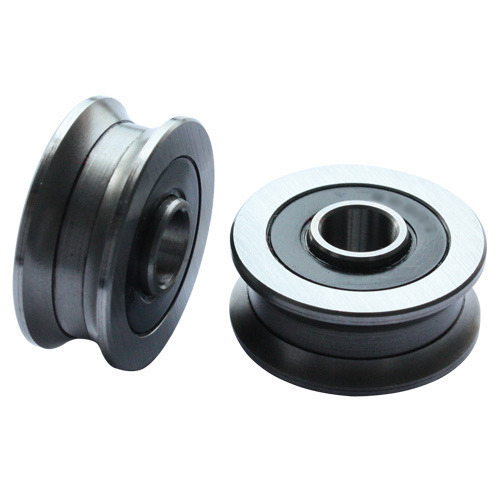
Can you provide examples of industries and applications where track bearings are frequently used?
Track bearings find extensive use in various industries and applications where smooth and controlled motion along tracks or guide rails is required. Let’s explore some examples of industries and applications where track bearings are frequently used:
- Material Handling and Conveying: Track bearings are widely employed in material handling and conveying systems, such as conveyor belts, roller conveyors, and overhead cranes. They facilitate the smooth movement of goods, packages, and components along the tracks, ensuring efficient and reliable transportation within warehouses, distribution centers, manufacturing facilities, and airports.
- Automotive and Transportation: Track bearings are utilized in various automotive applications, including suspension systems, steering systems, and sliding doors. They enable smooth and precise movement of components, contributing to vehicle performance, comfort, and safety. Additionally, track bearings are used in railway applications, such as railcar doors, sliding mechanisms, and track guidance systems.
- Aerospace and Defense: Track bearings play a crucial role in aerospace and defense applications, including aircraft landing gears, flap systems, and missile launchers. They provide the necessary support, guidance, and load-carrying capacity for critical components, ensuring smooth and controlled motion in demanding operating conditions.
- Industrial Machinery: Track bearings are commonly found in various industrial machinery and equipment. They are used in machine tools, robotics, printing presses, industrial ovens, and packaging machines, among others. In these applications, track bearings contribute to precise motion control, accurate positioning, and reliable performance of moving components.
- Construction and Mining: Track bearings are extensively employed in construction and mining equipment, such as excavators, bulldozers, cranes, and drilling machines. They provide support and guidance for the movable parts, allowing efficient and controlled movement in rugged and demanding environments.
- Medical and Healthcare: Track bearings are utilized in various medical and healthcare applications. They are used in hospital beds, medical imaging equipment, laboratory automation systems, and patient handling devices. Track bearings enable smooth and quiet operation, precise positioning, and patient comfort in these critical healthcare settings.
- Renewable Energy: Track bearings are employed in renewable energy systems, including solar tracking systems and wind turbine pitch and yaw mechanisms. They enable the precise tracking of solar panels and the controlled adjustment of wind turbine blades, maximizing energy capture and optimizing system performance.
These examples represent just a fraction of the many industries and applications where track bearings are frequently used. The versatility, reliability, and precise motion control provided by track bearings make them a fundamental component in numerous mechanical systems across various sectors.
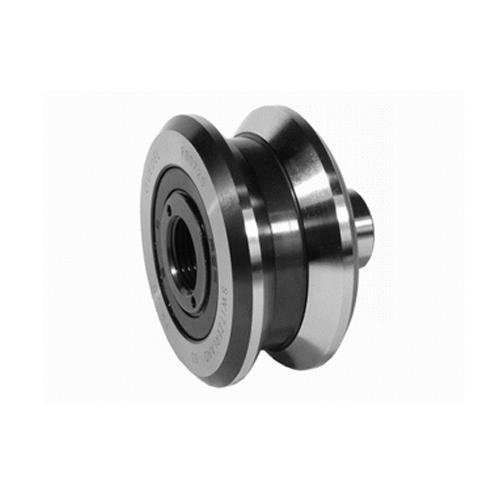
Can track bearings be used in both light-duty and heavy-duty machinery applications?
Yes, track bearings can be used in both light-duty and heavy-duty machinery applications. They are versatile components that offer reliable support for linear motion in a wide range of industrial settings. Here’s a detailed explanation:
1. Light-Duty Machinery Applications:
In light-duty machinery applications, track bearings provide cost-effective and efficient solutions for various tasks. Light-duty track bearings are designed to handle lower loads and are commonly used in applications such as:
- Office automation equipment
- Consumer electronics
- Printing machinery
- Small conveyors and material handling systems
- Automated vending machines
- Textile machinery
These applications typically involve lighter loads and lower operating speeds, making light-duty track bearings suitable for providing smooth and reliable linear motion.
2. Heavy-Duty Machinery Applications:
Track bearings are also widely used in heavy-duty machinery applications that require robust components capable of handling substantial loads and challenging operating conditions. Heavy-duty track bearings are designed to withstand higher loads and offer increased durability. They are commonly employed in applications such as:
- Material handling equipment
- Construction machinery
- Mining equipment
- Transportation systems
- Industrial automation
- Large-scale conveyors
- Steel mills
These applications often involve heavy loads, high operating speeds, and demanding environments. Track bearings in heavy-duty machinery applications are engineered to provide reliable performance, extended service life, and resistance to factors such as contamination, shock, and vibration.
Track bearings are available in various sizes, designs, and load capacities, allowing them to be tailored to the specific requirements of both light-duty and heavy-duty machinery applications. Manufacturers offer a range of options to accommodate different load capacities, operating conditions, and performance specifications.
It is important to consider the specific requirements and operating conditions of the machinery application when selecting track bearings. Consulting with bearing manufacturers or industry experts can help ensure the appropriate track bearings are chosen for optimal performance and reliability in both light-duty and heavy-duty machinery applications.
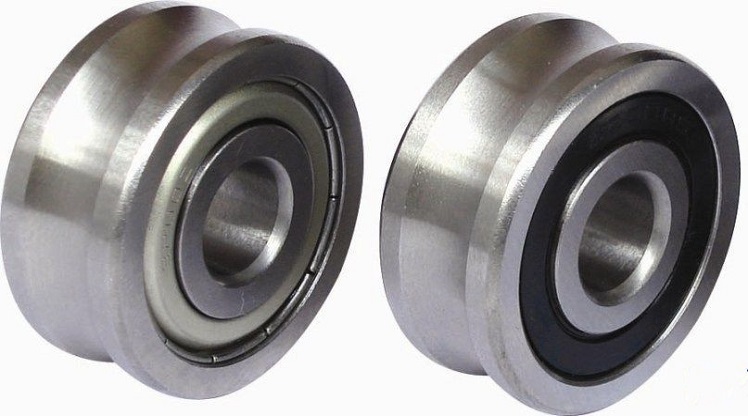
How do track bearings contribute to smooth and precise motion in machinery and equipment?
Track bearings play a crucial role in enabling smooth and precise motion in machinery and equipment. They provide support and guidance for moving components, allowing them to move along tracks or guide rails with minimal friction and accurate positioning. Let’s explore how track bearings contribute to smooth and precise motion:
- Reduced Friction: Track bearings are designed to minimize friction between the rolling elements (such as balls or rollers) and the raceways (inner and outer rings). By reducing friction, track bearings help to minimize energy losses, prevent excessive heat generation, and extend the lifespan of the bearing and other components in the system. Low friction enables smoother and more efficient motion, resulting in improved overall performance.
- Accuracy and Precision: Track bearings are manufactured to precise tolerances, ensuring consistent dimensions and smooth surfaces. This precision contributes to accurate and repeatable positioning of the moving components along the track or guide rail. It allows machinery and equipment to achieve the desired motion with minimal deviation or backlash, enabling precise control and operation.
- Load Distribution: Track bearings are designed to distribute loads evenly across the rolling elements and raceways. This load distribution helps prevent localized stress concentrations and ensures that the applied loads are shared by multiple contact points. By distributing the loads effectively, track bearings enhance the stability and integrity of the moving components, reducing the risk of premature wear or failure.
- Guidance and Alignment: Track bearings provide guidance and alignment for the moving components. They help maintain the desired orientation and position of the components along the track or guide rail, preventing misalignment and unwanted movements. This guidance ensures smooth and precise motion, minimizing vibrations, noise, and the risk of component damage or malfunction.
- Shock and Impact Absorption: Track bearings are designed to absorb shocks and impacts that may occur during operation. They help cushion the effects of sudden loads or vibrations, protecting the moving components and reducing the transmission of these forces to the rest of the machinery or equipment. This shock absorption capability contributes to smoother and more stable motion, enhancing overall performance and reliability.
By incorporating high-quality track bearings into machinery and equipment, engineers can achieve smooth and precise motion, improving the efficiency, accuracy, and longevity of the system. Proper selection, installation, and maintenance of track bearings are essential to ensure optimal performance and to minimize the risk of issues such as excessive wear, misalignment, or loss of motion control.


editor by CX 2024-05-03