Product Description
CF4 Kr12 Stud Type Track Roller Bearing Cam Follower Bearing
|
4 |
CF 4 B | CF 4 BUU |
7.4 |
12 |
4 |
8 |
20 |
11 |
— |
M4X0.7 |
6 |
— |
— |
0.08 |
210 |
220 |
||
|
5 |
CF 5 B | KR 13 | CF 5 BUU | KR 13 PP |
10.3 |
13 |
5 |
9 |
23 |
13 |
— |
M5X0.8 |
7.5 |
— |
— |
0.23 |
260 |
280 |
|
6 |
CF 6 B | KR 16 | CF 6 BUU | KR 16 PP |
18.5 |
16 |
6 |
11 |
28 |
16 |
— |
M6X1 |
8 |
— |
— |
0.3 |
370 |
400 |
|
8 |
CF 8 B | KR 19 | CF 8 BUU | KR 19 PP |
28.5 |
19 |
8 |
11 |
32 |
20 |
— |
M8X1.25 |
10 |
— |
— |
0.8 |
430 |
630 |
|
10 |
CF 10 B | KR 22 | CF 10 BUU | KR 22 PP |
45 |
22 |
10 |
12 |
36 |
23 |
— |
M10X1.25 |
12 |
— |
— |
1.2 |
550 |
670 |
| CF 10-1 B | KR 26 | CF 10-1 BUU | KR 26 PP |
60 |
26 |
10 |
12 |
36 |
23 |
— |
M10X1.25 |
12 |
— |
— |
1.2 |
550 |
670 |
|
|
12 |
CF 12 B | KR 30 | CF 12 BUU | KR 30 PP |
95 |
30 |
12 |
14 |
40 |
25 |
6 |
M12X1.5 |
13 |
6 |
3 |
2.2 |
810 |
900 |
| CF 12-1 B | KR 32 | CF 12-1 BUU | KR 32 PP |
105 |
32 |
12 |
14 |
40 |
25 |
6 |
M12X1.5 |
13 |
6 |
3 |
2.2 |
810 |
900 |
|
|
16 |
CF 16 B | KR 35 | CF 16 BUU | KR 35 PP |
169 |
35 |
16 |
18 |
52 |
32.5 |
8 |
M16X1.5 |
17 |
6 |
3 |
5.8 |
1230 |
1560 |
|
18 |
CF 18 B | KR 40 | CF 18 BUU | KR 40 PP |
250 |
40 |
18 |
20 |
58 |
36.5 |
8 |
M18X1.5 |
19 |
6 |
3 |
8.5 |
1500 |
2500 |
|
20 |
CF 20-1 B | KR 47 | CF 20-1 BUU | KR 47 PP |
386 |
47 |
20 |
24 |
66 |
40.5 |
9 |
M20X1.5 |
21 |
8 |
4 |
12 |
2110 |
3140 |
| CF 20 B | KR 52 | CF 20 BUU | KR 52 PP |
461 |
52 |
20 |
29 |
66 |
40.5 |
9 |
M20X1.5 |
21 |
8 |
4 |
12 |
2110 |
3140 |
|
|
24 |
CF 24 B | KR 62 | CF 24 BUU | KR 62 PP |
815 |
62 |
24 |
29 |
80 |
49.5 |
11 |
M24X1.5 |
25 |
8 |
4 |
22 |
3110 |
3840 |
| CF 24-1 B | KR 72 | CF 24-1 BUU | KR 72 PP |
1140 |
72 |
24 |
29 |
80 |
49.5 |
11 |
M24X1.5 |
25 |
8 |
4 |
22 |
3110 |
3840 |
|
|
30 |
CF 30 B | KR 80 | CF 30 BUU | KR 80 PP |
1870 |
80 |
30 |
35 |
100 |
63 |
15 |
M30X1.5 |
32 |
8 |
4 |
46 |
4630 |
6300 |
| CF 30-1 B | KR 85 | CF 30-1 BUU | KR 85 PP |
2030 |
85 |
30 |
35 |
100 |
63 |
15 |
M30X1.5 |
32 |
8 |
4 |
46 |
4630 |
6300 |
|
| CF 30-2 B | KR 90 | CF 30-2 BUU | KR 90 PP |
2220 |
90 |
30 |
35 |
100 |
63 |
15 |
M30X1.5 |
32 |
8 |
4 |
46 |
4630 |
6300 |
/* January 22, 2571 19:08:37 */!function(){function s(e,r){var a,o={};try{e&&e.split(“,”).forEach(function(e,t){e&&(a=e.match(/(.*?):(.*)$/))&&1
| Rolling Body: | Roller Bearings |
|---|---|
| The Number of Rows: | Single |
| Outer Dimension: | Small and Medium-Sized (60-115mm) |
| Material: | Bearing Steel |
| Spherical: | Non-Aligning Bearings |
| Load Direction: | Radial Bearing |
| Customization: |
Available
| Customized Request |
|---|
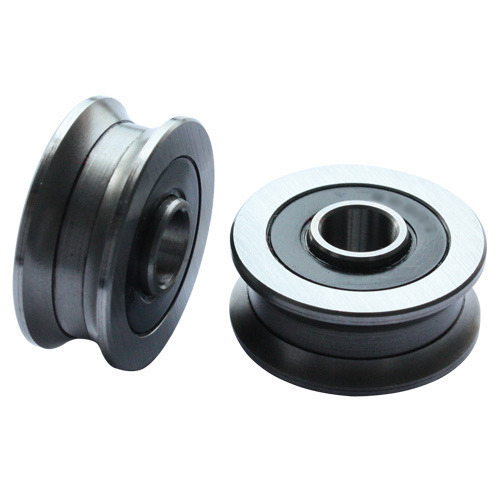
Can you provide examples of industries and applications where track bearings are frequently used?
Track bearings find extensive use in various industries and applications where smooth and controlled motion along tracks or guide rails is required. Let’s explore some examples of industries and applications where track bearings are frequently used:
- Material Handling and Conveying: Track bearings are widely employed in material handling and conveying systems, such as conveyor belts, roller conveyors, and overhead cranes. They facilitate the smooth movement of goods, packages, and components along the tracks, ensuring efficient and reliable transportation within warehouses, distribution centers, manufacturing facilities, and airports.
- Automotive and Transportation: Track bearings are utilized in various automotive applications, including suspension systems, steering systems, and sliding doors. They enable smooth and precise movement of components, contributing to vehicle performance, comfort, and safety. Additionally, track bearings are used in railway applications, such as railcar doors, sliding mechanisms, and track guidance systems.
- Aerospace and Defense: Track bearings play a crucial role in aerospace and defense applications, including aircraft landing gears, flap systems, and missile launchers. They provide the necessary support, guidance, and load-carrying capacity for critical components, ensuring smooth and controlled motion in demanding operating conditions.
- Industrial Machinery: Track bearings are commonly found in various industrial machinery and equipment. They are used in machine tools, robotics, printing presses, industrial ovens, and packaging machines, among others. In these applications, track bearings contribute to precise motion control, accurate positioning, and reliable performance of moving components.
- Construction and Mining: Track bearings are extensively employed in construction and mining equipment, such as excavators, bulldozers, cranes, and drilling machines. They provide support and guidance for the movable parts, allowing efficient and controlled movement in rugged and demanding environments.
- Medical and Healthcare: Track bearings are utilized in various medical and healthcare applications. They are used in hospital beds, medical imaging equipment, laboratory automation systems, and patient handling devices. Track bearings enable smooth and quiet operation, precise positioning, and patient comfort in these critical healthcare settings.
- Renewable Energy: Track bearings are employed in renewable energy systems, including solar tracking systems and wind turbine pitch and yaw mechanisms. They enable the precise tracking of solar panels and the controlled adjustment of wind turbine blades, maximizing energy capture and optimizing system performance.
These examples represent just a fraction of the many industries and applications where track bearings are frequently used. The versatility, reliability, and precise motion control provided by track bearings make them a fundamental component in numerous mechanical systems across various sectors.
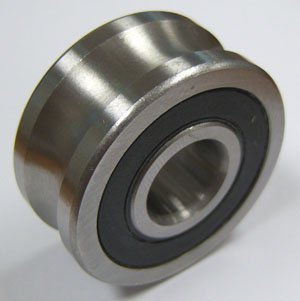
How do track bearings contribute to the precision, accuracy, and reliability of motion control systems?
Track bearings play a crucial role in enhancing the precision, accuracy, and reliability of motion control systems. They provide several key contributions that ensure smooth and consistent linear motion. Here’s a detailed explanation:
- Precision Guidance: Track bearings offer precise guidance for linear motion systems. They are designed with close tolerances and accurate geometries, allowing for accurate positioning and control of the moving components. This precision guidance ensures that the desired motion is achieved with minimal deviation or error.
- Smooth and Consistent Motion: By minimizing friction and providing smooth rolling or sliding surfaces, track bearings enable smooth and consistent motion in motion control systems. They reduce the effects of irregularities, misalignments, or vibrations, resulting in smoother operation and improved accuracy.
- Repeatable Performance: Track bearings provide repeatable performance in motion control systems. They offer consistent and predictable motion characteristics, allowing for precise and repeatable positioning of the moving components. This repeatability is essential in applications that require high accuracy and consistency, such as CNC machining, semiconductor manufacturing, and precision measurement systems.
- Load Distribution: Track bearings distribute the load evenly along their length, helping to minimize stress concentrations on specific components. This even load distribution improves the overall stability and reliability of the motion control system. It reduces the risk of component failure, deformation, or excessive wear, contributing to enhanced system reliability.
- Minimized Play and Backlash: Track bearings are designed to minimize play and backlash, which are undesirable movements or clearances between components. Play and backlash can introduce inaccuracies and reduce the precision of motion control systems. Track bearings with tight tolerances and optimized designs help minimize these undesirable effects, ensuring precise and accurate motion.
- Stiffness and Rigidity: Track bearings provide stiffness and rigidity to the motion control system. They resist deflection and maintain their shape under load, minimizing any unwanted flexing or bending. This stiffness enhances the overall stability and precision of the system, allowing for precise control and accurate motion even under varying loads or external forces.
- Resistance to Contamination: Track bearings are often equipped with seals or shields to protect against contaminants such as dirt, dust, or liquids. This protection helps maintain the precision and reliability of the motion control system by preventing the ingress of particles that could interfere with the smooth operation of the bearings or cause premature wear and failure.
By incorporating track bearings into motion control systems, industries can benefit from improved precision, accuracy, and reliability. Whether it’s achieving precise positioning, ensuring consistent and repeatable motion, minimizing play and backlash, or providing reliable load distribution, track bearings contribute to the overall performance and integrity of motion control systems.
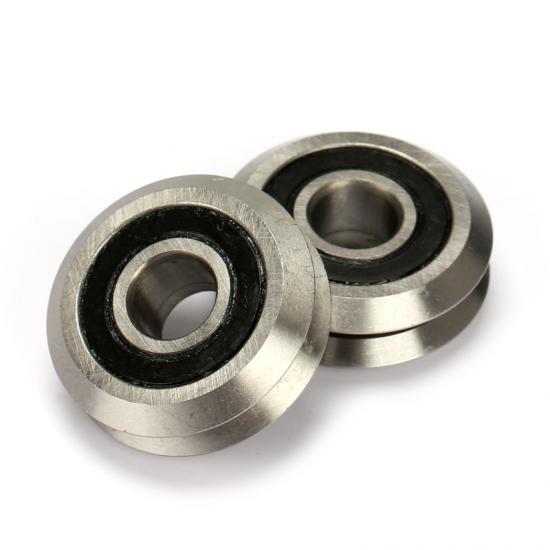
Can you describe the load-carrying capacity and load ratings of track bearings?
Track bearings are designed to withstand and carry various types of loads while maintaining smooth and controlled motion along a track or guide rail. The load-carrying capacity and load ratings of track bearings are crucial factors to consider when selecting the appropriate bearing for a specific application. Let’s delve into these concepts:
Load-Carrying Capacity:
The load-carrying capacity of a track bearing refers to its ability to support and distribute the applied loads without excessive deformation or failure. It is influenced by several factors, including the bearing’s design, materials, and operating conditions. The load-carrying capacity is typically specified in terms of static load capacity and dynamic load capacity.
The static load capacity indicates the maximum load that a track bearing can support without permanent deformation. It is determined by the bearing’s internal geometry, material strength, and the contact area between the rolling elements and raceways. Static loads are those that do not cause relative motion between the bearing and the track, such as when the bearing is stationary or subjected to a constant load.
The dynamic load capacity represents the maximum load that a track bearing can handle while still allowing smooth rolling motion. It takes into account the bearing’s ability to handle both radial and axial loads and considers factors such as the bearing’s internal clearance, lubrication, and operating speed. Dynamic loads are those that cause relative motion between the bearing and the track, such as when the bearing is subjected to varying loads or subjected to motion along the track.
Load Ratings:
Load ratings provide standardized values that indicate the maximum allowable loads for track bearings based on industry standards. These load ratings are commonly provided by bearing manufacturers and help users select the appropriate bearing for their specific application requirements. The two primary load ratings used for track bearings are the radial load rating and the axial load rating.
The radial load rating specifies the maximum radial load that a track bearing can withstand while maintaining proper performance and service life. It is expressed as a static load rating and a dynamic load rating. The static radial load rating indicates the maximum radial load that the bearing can support without permanent deformation, while the dynamic radial load rating represents the maximum radial load that the bearing can handle under typical operating conditions.
The axial load rating indicates the maximum axial load that a track bearing can withstand without excessive deformation or failure. It considers the applied axial force in the direction perpendicular to the track or guide rail. The axial load rating is typically provided as a static load rating and a dynamic load rating.
It’s important to note that load ratings are based on specific operating conditions, such as a certain speed, lubrication, and temperature. It is necessary to consider the actual operating conditions and factors such as shock loads, vibrations, and misalignments when applying load ratings to real-world applications.
By understanding the load-carrying capacity and load ratings of track bearings, engineers and designers can make informed decisions to ensure reliable and safe performance of the bearings in their applications.


editor by CX 2024-04-25