| LV201-14.2RS |
107 |
14 |
12 |
39.9 |
18 |
18 |
24 |
1 |
19.05 |
0.75
Do you prefer that we remind you ?
Immediate and free call/email back
2nd step: the outside diameter of the bearing
-
- A / Put your bearing on the grid as shown in the diagram.
-
- B / Mark the outline of the outer ring. For more convenience, use a pencil with a fine point.
-
- C / For ease of reading, do not hesitate to draw lines to the axes and then take the measurement.
3rd step: the thickness of the bearing
-
- A / In the same way as for the outer diameter and the bore, place your bearing on the edge on the grid as shown in the diagram.
- B / Draw the outer contour.
-
- C / For ease of reading, do not hesitate to draw lines to the axes and then take the measurement.
Conclusion :
You now have 3 measuring elements that will allow you to identify your bearing: the inside diameter (or bore), the outside diameter, and the thickness.
You can postpone these measurements in our bearing search tool on our website
FAQ
1.How many is the MOQ of your company?
Our company MOQ is 1pcs.
2.Could you accept OEM and customize?
YES, OEM is accepted and we can customize for you according to sample or drawing.
3.How do you guaranee the quality?
Evaluate the samples and drawings before production
Eva;iate the production process,and following it in schedual,guarantee the delievery time in time.
Evaluate the bearing dimension,clearance,noise,rotations of final productions.
Evaluate the fause products,block it and make an improve action.
4.Do you have stocks?
YES, we have most of the bearings showing on made in china in stock,please contact us for order details.
5.Do you have only Hubs Wheel Auto Bearing?
YES,we have more others types bearings,ANY BEARING YOU CAN THINK OF NOW,WE HAVE!
/* March 10, 2571 17:59:20 */!function(){function s(e,r){var a,o={};try{e&&e.split(“,”).forEach(function(e,t){e&&(a=e.match(/(.*?):(.*)$/))&&1
| Contact Angle: |
Normal |
| Aligning: |
Non-Aligning Bearing |
| Separated: |
Unseparated |
| Rows Number: |
Single |
| Load Direction: |
Radial Bearing |
| Material: |
Bearing Steel |
| Customization: |
Available
|
Customized Request
|
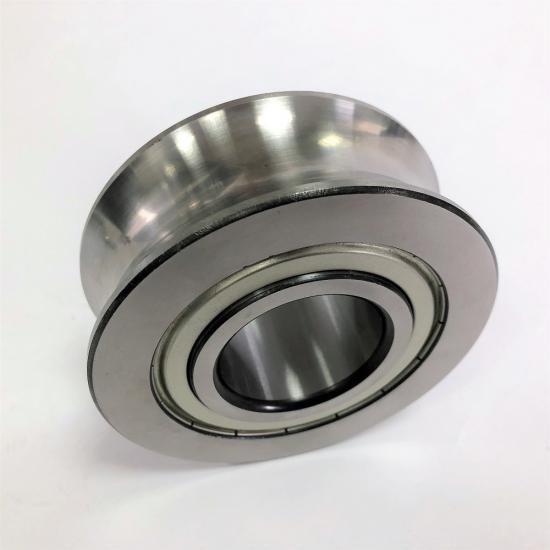
Can track bearings be customized or modified for specific track or linear motion applications?
Yes, track bearings can be customized or modified to meet specific requirements of track or linear motion applications. Manufacturers often offer a range of options and capabilities to tailor track bearings to the unique needs of different industries and applications. Here are some ways in which track bearings can be customized or modified:
- Size and Dimensional Variations: Track bearings can be customized in terms of size, diameter, width, and overall dimensions to fit specific track or linear motion systems. Manufacturers can provide bearings with varying sizes and load capacities to accommodate different application requirements.
- Material Selection: Track bearings can be manufactured from various materials depending on the specific application’s demands. Common materials include steel, stainless steel, ceramic, and polymer composites. Material selection can be customized to achieve desired properties such as corrosion resistance, high temperature tolerance, or low friction.
- Sealing and Protection: In applications where track bearings are exposed to contaminants, moisture, or harsh environments, customized sealing and protection features can be added. These may include additional seals, shields, or coatings to enhance the bearing’s resistance to dust, water, chemicals, or extreme temperatures.
- Lubrication Options: While self-lubricating or maintenance-free track bearings offer convenience, applications with specific lubrication requirements may benefit from customized lubrication options. Manufacturers can modify the bearing design to accommodate external lubrication systems or provide alternative lubrication methods to meet the unique demands of the application.
- Specialized Load and Speed Ratings: In certain applications, track bearings may need to handle exceptionally high loads or operate at high speeds. Manufacturers can customize the bearing design to offer specialized load and speed ratings to ensure optimal performance and reliability in such demanding conditions.
- Mounting and Attachment Options: Track bearings can be customized with different mounting and attachment options to facilitate easy installation and integration into specific track or linear motion systems. This may include variations in bolt hole patterns, flange designs, or specialized mounting arrangements.
- Track Geometry Compatibility: Track bearings can be designed or modified to match specific track or guide rail geometries. This ensures proper fit, alignment, and smooth operation along the designated track, minimizing the risk of misalignment or issues related to track compatibility.
It is important to work closely with bearing manufacturers or suppliers to discuss the specific requirements of the track or linear motion application. By collaborating with experts, it is possible to customize or modify track bearings to optimize performance, reliability, and longevity in a wide range of applications.
What innovations or advancements have been made in track bearing technology?
Track bearing technology has seen several innovations and advancements over the years, driven by the need for improved performance, increased reliability, and enhanced functionality. Here are some notable innovations in track bearing technology:
- Advanced Materials: The development of new materials has significantly improved the performance and longevity of track bearings. Materials such as ceramic, hybrid ceramics, and high-performance steels offer enhanced strength, corrosion resistance, and temperature stability, making them suitable for demanding applications.
- Improved Sealing Solutions: Sealing technology has advanced to provide better protection against contaminants, moisture, and other environmental factors. Innovative seal designs and materials, including labyrinth seals, triple lip seals, and specialized coatings, help keep track bearings clean and extend their service life.
- Enhanced Lubrication: Lubrication plays a crucial role in the performance and lifespan of track bearings. Advancements in lubrication technology, such as the development of high-performance greases and solid lubricants, have improved the efficiency, reliability, and maintenance requirements of track bearings.
- Integrated Sensor Systems: Track bearings can now incorporate integrated sensor systems to monitor various parameters such as temperature, vibration, and load. These sensors provide real-time data on bearing health and performance, enabling predictive maintenance strategies and early detection of potential issues.
- Smart Bearing Technology: Smart bearing technology combines sensor systems with advanced data analytics and connectivity capabilities. These bearings can communicate wirelessly with monitoring systems, enabling remote monitoring, condition-based maintenance, and optimization of operational parameters for improved performance and efficiency.
- Design Optimization: Computer-aided design (CAD) and finite element analysis (FEA) tools have revolutionized the design process for track bearings. These tools allow for precise modeling, simulation, and optimization of bearing geometries, materials, and load capacities, resulting in improved performance, reduced weight, and enhanced reliability.
- Application-Specific Customization: With advancements in manufacturing processes, track bearings can now be customized to meet the specific requirements of different applications. Manufacturers can tailor bearing designs, materials, and coatings to optimize performance, reliability, and compatibility with unique operating conditions.
These innovations and advancements in track bearing technology have collectively contributed to improved performance, extended service life, and enhanced functionality in a wide range of industries and applications. They continue to drive progress in the field, enabling track bearings to meet the evolving demands of modern industrial systems.
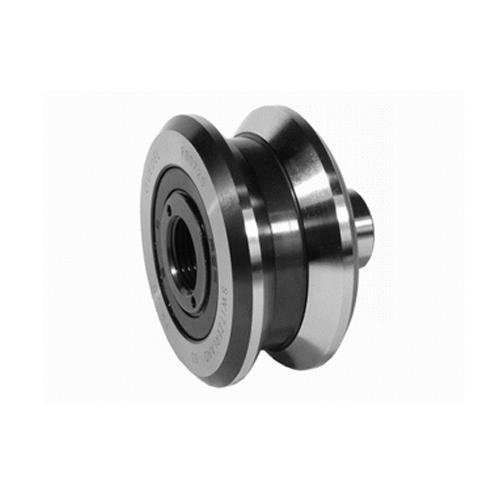
What are the components of a track bearing assembly and their functions?
A track bearing assembly consists of several components that work together to facilitate smooth and controlled motion along a track or guide rail. Let’s explore the components of a typical track bearing assembly and their functions:
- Outer Ring: The outer ring is the outermost component of a track bearing assembly. It provides structural support and houses the rolling elements. The outer ring is designed with a track or guide surface that interfaces with the track or rail, allowing the bearing to move along the desired path.
- Inner Ring: The inner ring is located inside the outer ring and provides a mounting surface for the bearing assembly. It may have a stud or shaft for attaching the bearing to the application. The inner ring helps in aligning and positioning the bearing assembly.
- Rolling Elements: The rolling elements are the components that enable smooth rolling motion between the inner and outer rings. In track bearings, the rolling elements are typically in the form of rollers or needles. They are designed to minimize friction and distribute the load evenly along the track surface.
- Cage: The cage, also known as a retainer, is a component that holds the rolling elements in position and maintains proper spacing between them. The cage prevents the rolling elements from contacting each other, reducing friction and wear. It also helps in guiding the rolling elements during operation.
- Seals or Shields: Track bearings often incorporate seals or shields to protect the internal components from contaminants such as dirt, dust, and moisture. Seals provide a physical barrier between the bearing and the external environment, while shields offer partial protection while allowing some lubrication to reach the rolling elements.
- Lubrication: Proper lubrication is crucial for the smooth operation and longevity of track bearings. Lubrication reduces friction, dissipates heat, and prevents wear between the rolling elements and raceways. Lubricants can be applied through grease fittings or oil ports, ensuring that the rolling elements roll smoothly along the track surface.
- Mounting Hardware: Depending on the specific design and application requirements, track bearing assemblies may include mounting hardware such as studs, bolts, or fasteners. These components are used to securely attach the bearing assembly to the application, ensuring proper alignment and stability.
By combining these components, a track bearing assembly provides reliable and controlled motion along a track or guide rail. The outer and inner rings, along with the rolling elements and cage, enable smooth rolling motion, while seals or shields protect the internal components from contaminants. Proper lubrication and mounting hardware ensure optimal performance and longevity of the track bearing assembly.
 
editor by CX 2024-02-05
|