Product Description
Product Description
| Product Name | Tracker roller bearing, Cam follower bearing |
| Precision Rating | P6, P0, P5, P4, P2 |
| Material | Bearing Steel (GCr15) |
| Clearance | C1 C2 C3 |
| Vibration & Noisy | Z1, Z2, Z3 V1, V2, V3 |
| Features | Inch Size, with Eccentric Collar, with Hexagon Hole |
| Application | Machine Tools, Auto Parts, Power Generators,and other Industrial Applications |
| Certification | ISO 9001: 2008 |
| Packing | 1. Neutral Packing Bearing 2. Industrial Packing 3. Commercial Packing Bearing 4. Customize |
Product Parameters
| IKO | IKO | Mcgill | D | d | C | B1 | B2 | G | G1 | ||||||||
| CF04B | KR12 | CF4BUU | KR12PP | MCFR12SBX | 12 | 4 | 8 | 20 | 11 | — | M4X0.7 | 6 | — | — | 0.08 | 210 | 220 |
| CF05B | KR13 | CF5BUU | KR13PP | MCFR13SBX | 13 | 5 | 9 | 23 | 13 | — | M5X0.8 | 7.5 | — | — | 0.23 | 260 | 280 |
| CF06B | KR16 | CF6BUU | KR16PP | MCFR16SBX | 16 | 6 | 11 | 28 | 16 | — | M6X1 | 8 | — | — | 0.3 | 370 | 400 |
| CF08B | KR19 | CF8BUU | KR19PP | MCFR19SBX | 19 | 8 | 11 | 32 | 20 | — | M8X1.25 | 10 | — | — | 0.8 | 430 | 630 |
| CF10B | KR22 | CF10BUU | KR22PP | MCFR22SBX | 22 | 10 | 12 | 36 | 23 | — | M10X1.25 | 12 | — | — | 1.2 | 550 | 670 |
| CF10-1B | KR26 | CF10-1BUU | KR26PP | MCFR26SBX | 26 | 10 | 12 | 36 | 23 | — | M10X1.25 | 12 | — | — | 1.2 | 550 | 670 |
| CF12B | KR30 | CF12BUU | KR30PP | MCFR30SBX | 30 | 12 | 14 | 40 | 25 | 6 | M12X1.5 | 13 | 6 | 3 | 2.2 | 810 | 900 |
| CF12-1B | KR32 | CF12-1BUU | KR32PP | MCFR32SBX | 32 | 12 | 14 | 40 | 25 | 6 | M12X1.5 | 13 | 6 | 3 | 2.2 | 810 | 900 |
| CF16B | KR35 | CF16BUU | KR35PP | MCFR35SBX | 35 | 16 | 18 | 52 | 32.5 | 8 | M16X1.5 | 17 | 6 | 3 | 5.8 | 1230 | 1560 |
| CF18B | KR40 | CF18BUU | KR40PP | MCFR40SBX | 40 | 18 | 20 | 58 | 36.5 | 8 | M18X1.5 | 19 | 6 | 3 | 8.5 | 1500 | 2500 |
| CF20-1B | KR47 | CF20-1BUU | KR47PP | MCFR47SBX | 47 | 20 | 24 | 66 | 40.5 | 9 | M20X1.5 | 21 | 8 | 4 | 12 | 2110 | 3140 |
| CF20B | KR52 | CF20BUU | KR52PP | MCFR52SBX | 52 | 20 | 29 | 66 | 40.5 | 9 | M20X1.5 | 21 | 8 | 4 | 12 | 2110 | 3140 |
| CF24B | KR62 | CF24BUU | KR62PP | MCFR62SBX | 62 | 24 | 29 | 80 | 49.5 | 11 | M24X1.5 | 25 | 8 | 4 | 22 | 3110 | 3840 |
| CF24-1B | KR72 | CF24-1BUU | KR72PP | MCFR72SBX | 72 | 24 | 29 | 80 | 49.5 | 11 | M24X1.5 | 25 | 8 | 4 | 22 | 3110 | 3840 |
| CF30B | KR80 | CF30BUU | KR80PP | MCFR80SBX | 80 | 30 | 35 | 100 | 63 | 15 | M30X1.5 | 32 | 8 | 4 | 46 | 4630 | 6300 |
| CF30-1B | KR85 | CF30-1BUU | KR85PP | MCFR85SBX | 85 | 30 | 35 | 100 | 63 | 15 | M30X1.5 | 32 | 8 | 4 | 46 | 4630 | 6300 |
| CF30-2B | KR90 | CF30-2BUU | KR90PP | MCFR90SBX | 90 | 30 | 35 | 100 | 63 | 15 | M30X1.5 | 32 | 8 | 4 | 46 | 4630 | 6300 |
Workshop
Packaging & Shipping
Bearings Package:
1):Inner Plastic Bag+ Paper Box + Carton(+Pallet)
2):Small sizes:Plastic Tube + Carton
3):Big sizes:Wooden Case
Bearings Lead time:
We will prepare your order as soon as possible
1)2-3 days for ex-stock
2)7-20 days for others
Shipping & Delivery time:
1) Less than 45 Kg:DHL TNT Fedex UPS express will be better,( 4-7 days delivered to your address)
2) Between 45 to 200 Kg:Air transiportation will be better,( 5-14 days delivered to your airport)
3) Over 200 Kg:Sea transportation will be better.( Cheapest,18-45 days to your port ).
/* March 10, 2571 17:59:20 */!function(){function s(e,r){var a,o={};try{e&&e.split(“,”).forEach(function(e,t){e&&(a=e.match(/(.*?):(.*)$/))&&1
| Rows Number: | Single |
|---|---|
| Material: | Gcr15 |
| Precision: | P0 P6 P5 P4 P2 |
| Clearance: | C0 C2 C3 C4 C5 |
| Vibration: | Z1V1 Z2V2 Z3V3 |
| Lubricated: | Oil or Grease |
| Customization: |
Available
| Customized Request |
|---|
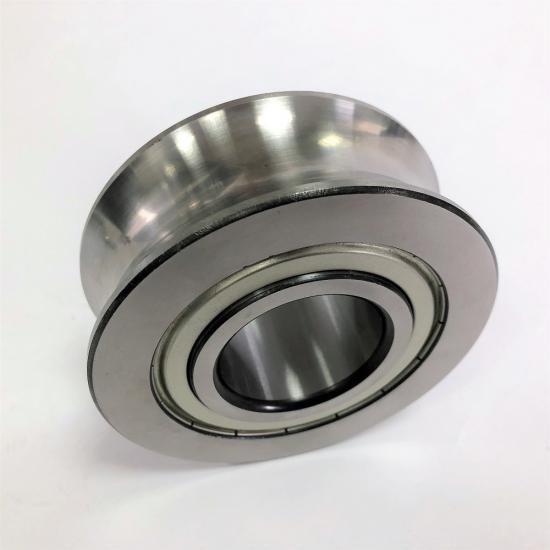
Can track bearings be customized or modified for specific track or linear motion applications?
Yes, track bearings can be customized or modified to meet specific requirements of track or linear motion applications. Manufacturers often offer a range of options and capabilities to tailor track bearings to the unique needs of different industries and applications. Here are some ways in which track bearings can be customized or modified:
- Size and Dimensional Variations: Track bearings can be customized in terms of size, diameter, width, and overall dimensions to fit specific track or linear motion systems. Manufacturers can provide bearings with varying sizes and load capacities to accommodate different application requirements.
- Material Selection: Track bearings can be manufactured from various materials depending on the specific application’s demands. Common materials include steel, stainless steel, ceramic, and polymer composites. Material selection can be customized to achieve desired properties such as corrosion resistance, high temperature tolerance, or low friction.
- Sealing and Protection: In applications where track bearings are exposed to contaminants, moisture, or harsh environments, customized sealing and protection features can be added. These may include additional seals, shields, or coatings to enhance the bearing’s resistance to dust, water, chemicals, or extreme temperatures.
- Lubrication Options: While self-lubricating or maintenance-free track bearings offer convenience, applications with specific lubrication requirements may benefit from customized lubrication options. Manufacturers can modify the bearing design to accommodate external lubrication systems or provide alternative lubrication methods to meet the unique demands of the application.
- Specialized Load and Speed Ratings: In certain applications, track bearings may need to handle exceptionally high loads or operate at high speeds. Manufacturers can customize the bearing design to offer specialized load and speed ratings to ensure optimal performance and reliability in such demanding conditions.
- Mounting and Attachment Options: Track bearings can be customized with different mounting and attachment options to facilitate easy installation and integration into specific track or linear motion systems. This may include variations in bolt hole patterns, flange designs, or specialized mounting arrangements.
- Track Geometry Compatibility: Track bearings can be designed or modified to match specific track or guide rail geometries. This ensures proper fit, alignment, and smooth operation along the designated track, minimizing the risk of misalignment or issues related to track compatibility.
It is important to work closely with bearing manufacturers or suppliers to discuss the specific requirements of the track or linear motion application. By collaborating with experts, it is possible to customize or modify track bearings to optimize performance, reliability, and longevity in a wide range of applications.
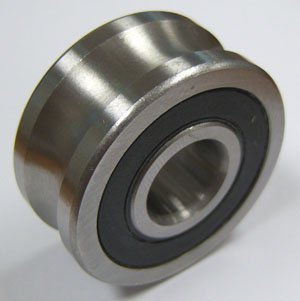
How do track bearings contribute to the precision, accuracy, and reliability of motion control systems?
Track bearings play a crucial role in enhancing the precision, accuracy, and reliability of motion control systems. They provide several key contributions that ensure smooth and consistent linear motion. Here’s a detailed explanation:
- Precision Guidance: Track bearings offer precise guidance for linear motion systems. They are designed with close tolerances and accurate geometries, allowing for accurate positioning and control of the moving components. This precision guidance ensures that the desired motion is achieved with minimal deviation or error.
- Smooth and Consistent Motion: By minimizing friction and providing smooth rolling or sliding surfaces, track bearings enable smooth and consistent motion in motion control systems. They reduce the effects of irregularities, misalignments, or vibrations, resulting in smoother operation and improved accuracy.
- Repeatable Performance: Track bearings provide repeatable performance in motion control systems. They offer consistent and predictable motion characteristics, allowing for precise and repeatable positioning of the moving components. This repeatability is essential in applications that require high accuracy and consistency, such as CNC machining, semiconductor manufacturing, and precision measurement systems.
- Load Distribution: Track bearings distribute the load evenly along their length, helping to minimize stress concentrations on specific components. This even load distribution improves the overall stability and reliability of the motion control system. It reduces the risk of component failure, deformation, or excessive wear, contributing to enhanced system reliability.
- Minimized Play and Backlash: Track bearings are designed to minimize play and backlash, which are undesirable movements or clearances between components. Play and backlash can introduce inaccuracies and reduce the precision of motion control systems. Track bearings with tight tolerances and optimized designs help minimize these undesirable effects, ensuring precise and accurate motion.
- Stiffness and Rigidity: Track bearings provide stiffness and rigidity to the motion control system. They resist deflection and maintain their shape under load, minimizing any unwanted flexing or bending. This stiffness enhances the overall stability and precision of the system, allowing for precise control and accurate motion even under varying loads or external forces.
- Resistance to Contamination: Track bearings are often equipped with seals or shields to protect against contaminants such as dirt, dust, or liquids. This protection helps maintain the precision and reliability of the motion control system by preventing the ingress of particles that could interfere with the smooth operation of the bearings or cause premature wear and failure.
By incorporating track bearings into motion control systems, industries can benefit from improved precision, accuracy, and reliability. Whether it’s achieving precise positioning, ensuring consistent and repeatable motion, minimizing play and backlash, or providing reliable load distribution, track bearings contribute to the overall performance and integrity of motion control systems.
Can you explain the different types of track bearings used in industrial and mechanical systems?
Track bearings, also known as track rollers or track follower bearings, come in various types to suit different industrial and mechanical system requirements. Let’s explore the different types of track bearings commonly used in these applications:
- Yoke Type Track Rollers: Yoke type track rollers are a popular type of track bearing characterized by their thick outer rings. They are designed to handle high radial loads and moderate axial loads. Yoke type track rollers feature an inner ring with a stud for mounting on a shaft or stud. They are widely used in applications such as conveyors, cam mechanisms, material handling systems, and agricultural machinery.
- Stud Type Track Rollers: Stud type track rollers are similar to yoke type track rollers but lack an inner ring. Instead, they have a stud that serves as the mounting component. Stud type track rollers are suitable for applications with limited space or where the outer ring can be directly mounted onto a mating surface. They are commonly used in applications such as cam mechanisms, indexing equipment, and tensioning systems.
- Cam Followers: Cam followers, also known as cam bearings or track followers, are track bearings designed specifically for cam-driven systems. They have a stud or shaft for mounting and a built-in roller or needle bearing. Cam followers follow the profile of a cam, converting the rotary motion of the cam into linear or oscillating motion. They are used in applications such as printing presses, packaging machinery, textile machinery, and automotive engines.
- Guiding Track Rollers: Guiding track rollers are track bearings designed to provide precise and guided linear motion. They feature a thick outer ring with a track or guide surface. Guiding track rollers are commonly used in material handling systems, conveyor systems, and automated machinery to facilitate smooth and controlled movement along a track or guide rail.
- V-Groove Track Rollers: V-groove track rollers have a specialized V-shaped groove on the outer ring. This groove allows the rollers to run on V-shaped tracks or rails, providing accurate alignment and guidance. V-groove track rollers are used in applications such as track systems, sliding gates, and linear motion guides.
- Flanged Track Rollers: Flanged track rollers feature an additional flange on the outer ring. The flange helps in axial guidance and prevents the track roller from shifting or tilting under axial loads. Flanged track rollers are commonly used in applications such as cam mechanisms, linear motion systems, and conveyor systems.
- Idler Track Rollers: Idler track rollers are non-powered track rollers used to support and guide conveyor belts, chains, or other moving components. They are typically used in material handling systems, conveyor systems, and packaging machinery.
These different types of track bearings offer versatility and flexibility in industrial and mechanical systems. Depending on the specific application requirements, engineers and designers can select the most suitable type of track bearing to ensure smooth motion, reliable operation, and efficient load support. The choice of track bearing type depends on factors such as load capacity, space constraints, track configuration, and environmental conditions.


editor by CX 2024-02-24