Measure before you loosen the existing part
When possible, record the current position, exposed stud length and surrounding clearances before removal. A photo of the installed orientation often explains more than a model number, especially when spacers, shoulders or eccentric adjustment are involved.
Confirm the stud and envelope
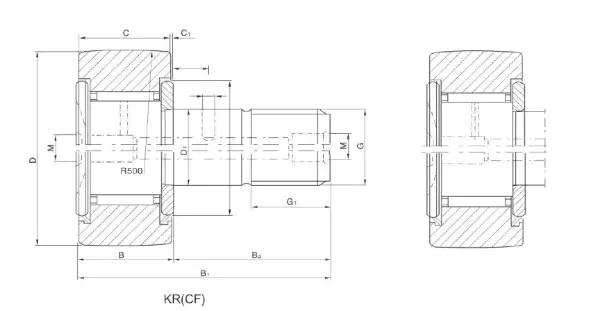
Match the stud thread and the main longitudinal dimensions first. The EP series table includes G1, B max, B1 max, B2 and B3 alongside C and D*. A correct outside diameter with the wrong stud or shoulder geometry can still make a replacement unusable.
Inspect the mating track
The outer ring transfers load into the cam or guide surface. Look for pitting, edge marking, steps, contamination or uneven wear on that track. Replacing the follower without correcting a damaged track can shorten the life of the new component.
Final check
Rotate the mechanism by hand where safe and permitted, verify clearance through the full travel, and follow the machine builder’s fastening and lubrication requirements. If those requirements are unavailable, treat torque and fit questions as engineering items to confirm rather than guessing.