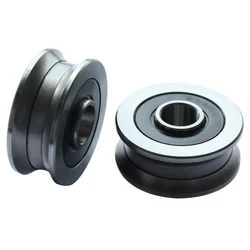
What are the benefits of using self-lubricating or maintenance-free track bearings?
Using self-lubricating or maintenance-free track bearings can offer several significant benefits in terms of convenience, performance, and cost-effectiveness. Let’s explore the advantages of utilizing self-lubricating or maintenance-free track bearings:
- Elimination of External Lubrication: One of the primary advantages of self-lubricating or maintenance-free track bearings is that they eliminate the need for external lubrication. These bearings are pre-lubricated with a solid lubricant or have a built-in lubrication system that provides a continuous supply of lubrication to the bearing surfaces. This eliminates the requirement for manual lubrication or periodic re-lubrication, saving time and effort in maintenance tasks.
- Extended Service Life: Self-lubricating or maintenance-free track bearings are designed to provide long service life. The presence of a solid lubricant or a self-lubricating material within the bearing helps reduce friction, wear, and the risk of surface damage. This results in improved durability and extended service life, reducing the frequency of bearing replacements and downtime for maintenance.
- Reduced Contamination and Cleanliness: External lubricants, such as grease or oil, can attract and accumulate contaminants, such as dust, dirt, or debris. In contrast, self-lubricating or maintenance-free track bearings minimize the risk of contamination since they do not require additional lubricants. This helps maintain a cleaner operating environment and reduces the potential for bearing failure due to contamination-related issues.
- Improved Reliability and Performance: Self-lubricating or maintenance-free track bearings offer consistent and reliable performance throughout their service life. The presence of an effective lubrication system ensures proper lubrication even under demanding operating conditions, such as high temperatures or high loads. This contributes to smoother and more predictable motion, reduced friction, and enhanced overall performance of the machinery or equipment.
- Cost Savings: While self-lubricating or maintenance-free track bearings may have a higher initial cost compared to standard bearings, they can result in cost savings over the long term. The elimination of manual lubrication and the extended service life of these bearings reduce maintenance requirements, labor costs, and the need for lubrication supplies. Additionally, the increased reliability and performance can minimize downtime and associated production losses.
- Ease of Installation: Self-lubricating or maintenance-free track bearings are typically designed for easy installation. They often come pre-assembled, pre-lubricated, or with integral lubrication systems, simplifying the installation process. This can save time and effort during initial setup or replacement of bearings in machinery or equipment.
Overall, self-lubricating or maintenance-free track bearings offer the advantages of reduced maintenance, extended service life, improved reliability, and cost savings. These bearings are particularly beneficial in applications where regular lubrication is challenging, time-consuming, or not feasible, or in environments where contamination control is critical.
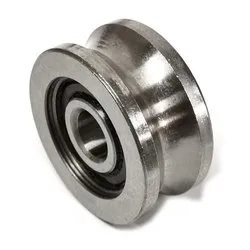
What innovations or advancements have been made in track bearing technology?
Track bearing technology has seen several innovations and advancements over the years, driven by the need for improved performance, increased reliability, and enhanced functionality. Here are some notable innovations in track bearing technology:
- Advanced Materials: The development of new materials has significantly improved the performance and longevity of track bearings. Materials such as ceramic, hybrid ceramics, and high-performance steels offer enhanced strength, corrosion resistance, and temperature stability, making them suitable for demanding applications.
- Improved Sealing Solutions: Sealing technology has advanced to provide better protection against contaminants, moisture, and other environmental factors. Innovative seal designs and materials, including labyrinth seals, triple lip seals, and specialized coatings, help keep track bearings clean and extend their service life.
- Enhanced Lubrication: Lubrication plays a crucial role in the performance and lifespan of track bearings. Advancements in lubrication technology, such as the development of high-performance greases and solid lubricants, have improved the efficiency, reliability, and maintenance requirements of track bearings.
- Integrated Sensor Systems: Track bearings can now incorporate integrated sensor systems to monitor various parameters such as temperature, vibration, and load. These sensors provide real-time data on bearing health and performance, enabling predictive maintenance strategies and early detection of potential issues.
- Smart Bearing Technology: Smart bearing technology combines sensor systems with advanced data analytics and connectivity capabilities. These bearings can communicate wirelessly with monitoring systems, enabling remote monitoring, condition-based maintenance, and optimization of operational parameters for improved performance and efficiency.
- Design Optimization: Computer-aided design (CAD) and finite element analysis (FEA) tools have revolutionized the design process for track bearings. These tools allow for precise modeling, simulation, and optimization of bearing geometries, materials, and load capacities, resulting in improved performance, reduced weight, and enhanced reliability.
- Application-Specific Customization: With advancements in manufacturing processes, track bearings can now be customized to meet the specific requirements of different applications. Manufacturers can tailor bearing designs, materials, and coatings to optimize performance, reliability, and compatibility with unique operating conditions.
These innovations and advancements in track bearing technology have collectively contributed to improved performance, extended service life, and enhanced functionality in a wide range of industries and applications. They continue to drive progress in the field, enabling track bearings to meet the evolving demands of modern industrial systems.
Can you explain the different types of track bearings used in industrial and mechanical systems?
Track bearings, also known as track rollers or track follower bearings, come in various types to suit different industrial and mechanical system requirements. Let’s explore the different types of track bearings commonly used in these applications:
- Yoke Type Track Rollers: Yoke type track rollers are a popular type of track bearing characterized by their thick outer rings. They are designed to handle high radial loads and moderate axial loads. Yoke type track rollers feature an inner ring with a stud for mounting on a shaft or stud. They are widely used in applications such as conveyors, cam mechanisms, material handling systems, and agricultural machinery.
- Stud Type Track Rollers: Stud type track rollers are similar to yoke type track rollers but lack an inner ring. Instead, they have a stud that serves as the mounting component. Stud type track rollers are suitable for applications with limited space or where the outer ring can be directly mounted onto a mating surface. They are commonly used in applications such as cam mechanisms, indexing equipment, and tensioning systems.
- Cam Followers: Cam followers, also known as cam bearings or track followers, are track bearings designed specifically for cam-driven systems. They have a stud or shaft for mounting and a built-in roller or needle bearing. Cam followers follow the profile of a cam, converting the rotary motion of the cam into linear or oscillating motion. They are used in applications such as printing presses, packaging machinery, textile machinery, and automotive engines.
- Guiding Track Rollers: Guiding track rollers are track bearings designed to provide precise and guided linear motion. They feature a thick outer ring with a track or guide surface. Guiding track rollers are commonly used in material handling systems, conveyor systems, and automated machinery to facilitate smooth and controlled movement along a track or guide rail.
- V-Groove Track Rollers: V-groove track rollers have a specialized V-shaped groove on the outer ring. This groove allows the rollers to run on V-shaped tracks or rails, providing accurate alignment and guidance. V-groove track rollers are used in applications such as track systems, sliding gates, and linear motion guides.
- Flanged Track Rollers: Flanged track rollers feature an additional flange on the outer ring. The flange helps in axial guidance and prevents the track roller from shifting or tilting under axial loads. Flanged track rollers are commonly used in applications such as cam mechanisms, linear motion systems, and conveyor systems.
- Idler Track Rollers: Idler track rollers are non-powered track rollers used to support and guide conveyor belts, chains, or other moving components. They are typically used in material handling systems, conveyor systems, and packaging machinery.
These different types of track bearings offer versatility and flexibility in industrial and mechanical systems. Depending on the specific application requirements, engineers and designers can select the most suitable type of track bearing to ensure smooth motion, reliable operation, and efficient load support. The choice of track bearing type depends on factors such as load capacity, space constraints, track configuration, and environmental conditions.


editor by CX 2024-04-11