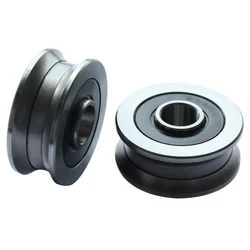
What are the benefits of using self-lubricating or maintenance-free track bearings?
Using self-lubricating or maintenance-free track bearings can offer several significant benefits in terms of convenience, performance, and cost-effectiveness. Let’s explore the advantages of utilizing self-lubricating or maintenance-free track bearings:
- Elimination of External Lubrication: One of the primary advantages of self-lubricating or maintenance-free track bearings is that they eliminate the need for external lubrication. These bearings are pre-lubricated with a solid lubricant or have a built-in lubrication system that provides a continuous supply of lubrication to the bearing surfaces. This eliminates the requirement for manual lubrication or periodic re-lubrication, saving time and effort in maintenance tasks.
- Extended Service Life: Self-lubricating or maintenance-free track bearings are designed to provide long service life. The presence of a solid lubricant or a self-lubricating material within the bearing helps reduce friction, wear, and the risk of surface damage. This results in improved durability and extended service life, reducing the frequency of bearing replacements and downtime for maintenance.
- Reduced Contamination and Cleanliness: External lubricants, such as grease or oil, can attract and accumulate contaminants, such as dust, dirt, or debris. In contrast, self-lubricating or maintenance-free track bearings minimize the risk of contamination since they do not require additional lubricants. This helps maintain a cleaner operating environment and reduces the potential for bearing failure due to contamination-related issues.
- Improved Reliability and Performance: Self-lubricating or maintenance-free track bearings offer consistent and reliable performance throughout their service life. The presence of an effective lubrication system ensures proper lubrication even under demanding operating conditions, such as high temperatures or high loads. This contributes to smoother and more predictable motion, reduced friction, and enhanced overall performance of the machinery or equipment.
- Cost Savings: While self-lubricating or maintenance-free track bearings may have a higher initial cost compared to standard bearings, they can result in cost savings over the long term. The elimination of manual lubrication and the extended service life of these bearings reduce maintenance requirements, labor costs, and the need for lubrication supplies. Additionally, the increased reliability and performance can minimize downtime and associated production losses.
- Ease of Installation: Self-lubricating or maintenance-free track bearings are typically designed for easy installation. They often come pre-assembled, pre-lubricated, or with integral lubrication systems, simplifying the installation process. This can save time and effort during initial setup or replacement of bearings in machinery or equipment.
Overall, self-lubricating or maintenance-free track bearings offer the advantages of reduced maintenance, extended service life, improved reliability, and cost savings. These bearings are particularly beneficial in applications where regular lubrication is challenging, time-consuming, or not feasible, or in environments where contamination control is critical.
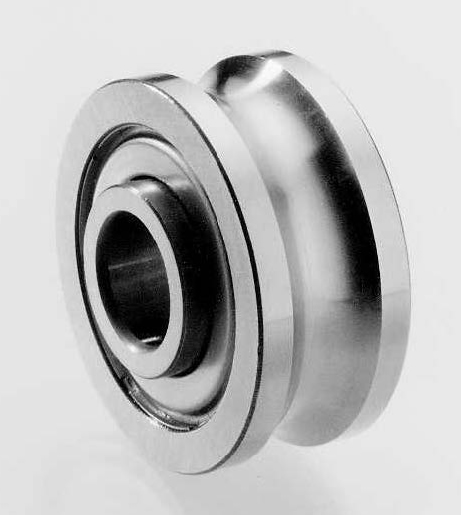
Are there potential challenges or limitations in using track bearings in specific industries?
While track bearings are widely used in various industries for their ability to support linear motion and handle heavy loads, there can be potential challenges and limitations associated with their use in specific industries. Here’s a detailed explanation:
1. Contamination and Harsh Environments:
Industries such as mining, construction, and agriculture often operate in harsh environments with high levels of contamination, including dust, dirt, and moisture. These contaminants can enter the track bearings and cause accelerated wear, reduced performance, and potential failure. Regular maintenance and appropriate sealing measures are required to mitigate these challenges.
2. High-Temperature Environments:
In industries like metal processing, glass manufacturing, and foundries, track bearings may be exposed to high temperatures. Excessive heat can affect the lubrication properties and structural integrity of bearings, leading to premature failure. Selecting track bearings specifically designed for high-temperature applications and using suitable lubricants are necessary to overcome this limitation.
3. Corrosive Chemicals:
Industries such as chemical processing, food and beverage, and wastewater treatment involve exposure to corrosive chemicals. Corrosion can significantly affect the performance and lifespan of track bearings. Choosing bearings made from corrosion-resistant materials or applying protective coatings can help address this challenge.
4. Heavy Load and Impact:
Industries like material handling, mining, and construction often require track bearings to withstand heavy loads and frequent impacts. Excessive load or impact can lead to premature wear, deformation, or even catastrophic failure of the bearings. Selecting track bearings with appropriate load capacities and impact resistance is crucial in these industries.
5. Precision and Accuracy:
In industries such as robotics, semiconductor manufacturing, and precision machining, track bearings may need to meet stringent requirements for precision and accuracy. Any deviation or play in the bearings can impact the overall performance and quality of the process. Using high-precision track bearings and ensuring proper alignment and installation are essential in these cases.
6. Speed and Acceleration:
Applications involving high-speed or rapid acceleration, such as automated assembly lines or conveyor systems, can impose additional challenges on track bearings. Excessive speed or acceleration can generate heat and vibration, leading to increased wear and reduced bearing life. Choosing track bearings with suitable speed and acceleration ratings is vital in these industries.
It is important to consult with bearing manufacturers or industry experts to identify and address any potential challenges or limitations specific to the industry and application at hand. By understanding these challenges and selecting track bearings designed to overcome them, industries can optimize performance, reliability, and longevity while mitigating risks and ensuring smooth operation.
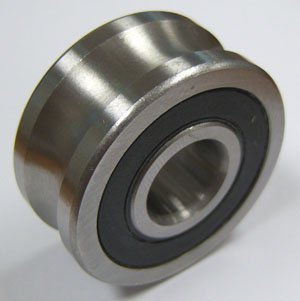
Are there specific materials commonly used in the construction of track bearings?
Yes, specific materials are commonly used in the construction of track bearings to ensure their durability, load-carrying capacity, and resistance to various operating conditions. Let’s discuss the materials commonly used for different components of track bearings:
- Outer and Inner Rings: The outer and inner rings of track bearings are typically made from high-quality bearing steels such as chrome steel (e.g., AISI 52100) or stainless steel. These materials offer excellent strength, hardness, and wear resistance. Chrome steel is the most commonly used material due to its favorable combination of mechanical properties and cost-effectiveness. In some cases, specialized alloys or heat-treated steels may be used to enhance specific properties like corrosion resistance or high-temperature performance.
- Rolling Elements: The rolling elements in track bearings are commonly made from bearing-grade steel or ceramic materials. Bearing-grade steel, similar to the materials used for the outer and inner rings, offers high strength and wear resistance. Ceramic materials, such as silicon nitride (Si3N4) or zirconia (ZrO2), are also used in certain applications where their advantages, such as high hardness, low density, and resistance to corrosion and high temperatures, are desired.
- Cage: The cage in track bearings is typically made from materials such as steel, brass, or engineered polymers. Steel cages are commonly used due to their strength and durability. Brass cages offer good corrosion resistance and are suitable for certain operating environments. Engineered polymers, such as polyamide (nylon), are used in applications where low friction, noise reduction, or lightweight design is desired.
- Seals or Shields: The seals or shields used in track bearings are made from various materials depending on the specific requirements. Common materials include rubber or synthetic elastomers for seals, and steel or stainless steel for shields. These materials provide effective protection against contaminants while maintaining proper lubrication within the bearing assembly.
- Lubrication: Lubricants used in track bearings can vary depending on the application and operating conditions. Common lubrication options include mineral oils, synthetic oils, and greases. The lubricant’s formulation is carefully chosen to provide adequate lubrication, reduce friction and wear, and protect against corrosion and contamination.
Overall, the choice of materials for track bearings is influenced by factors such as load requirements, operating conditions (including temperature and moisture levels), desired lifespan, and cost considerations. By selecting appropriate materials for each component, track bearings can deliver reliable performance and extended service life in a wide range of industrial and mechanical applications.


editor by CX 2024-02-07